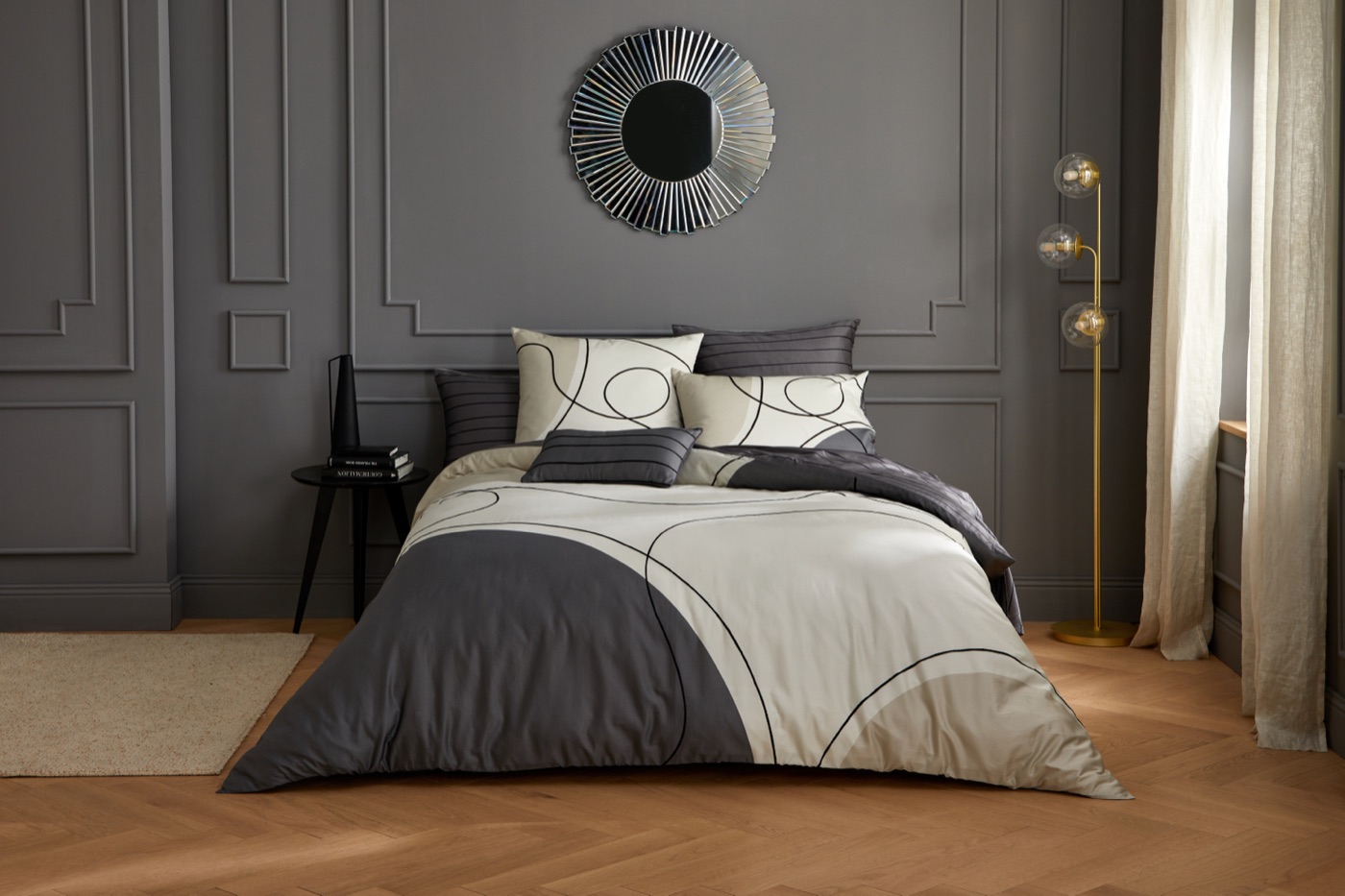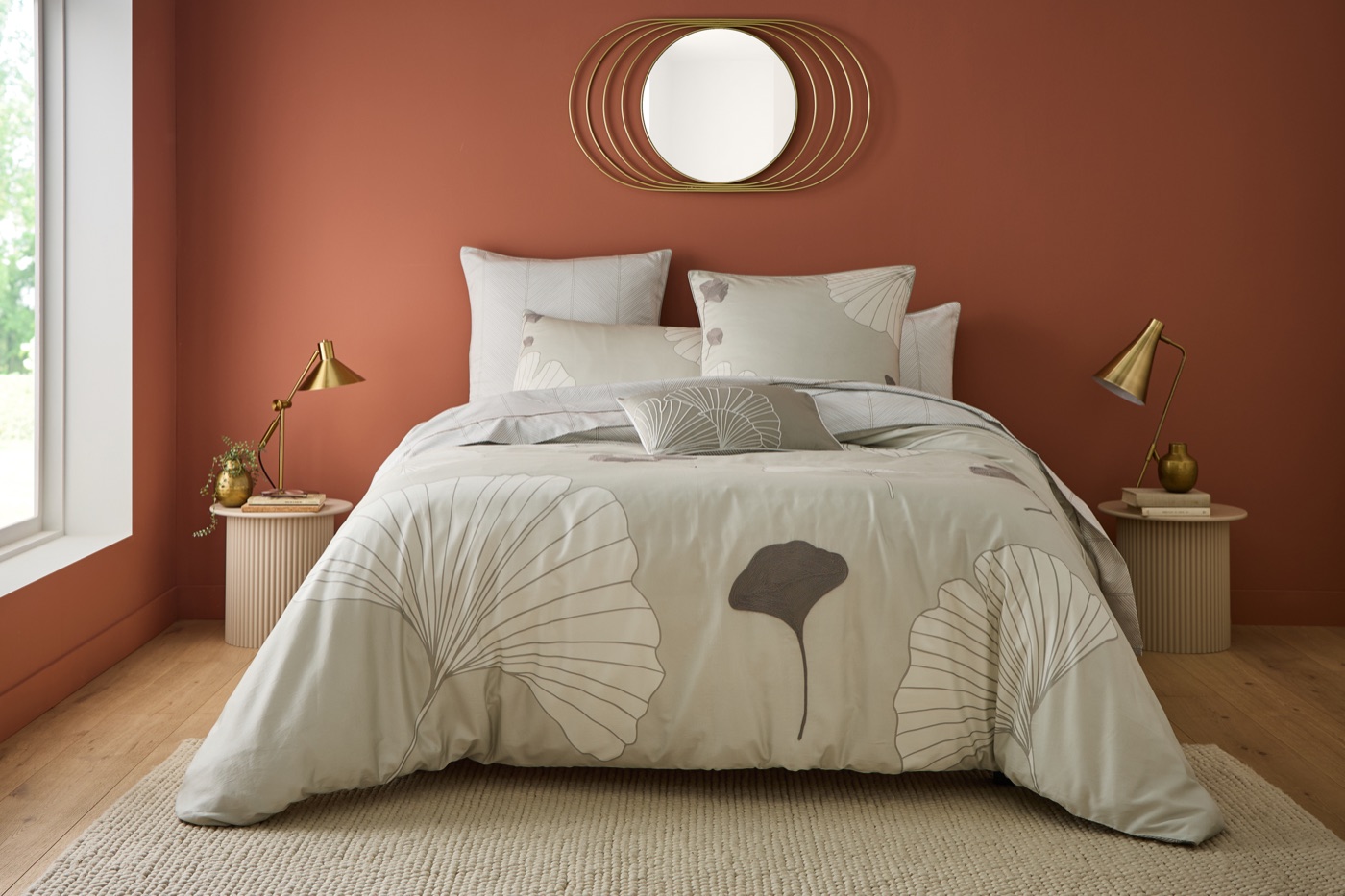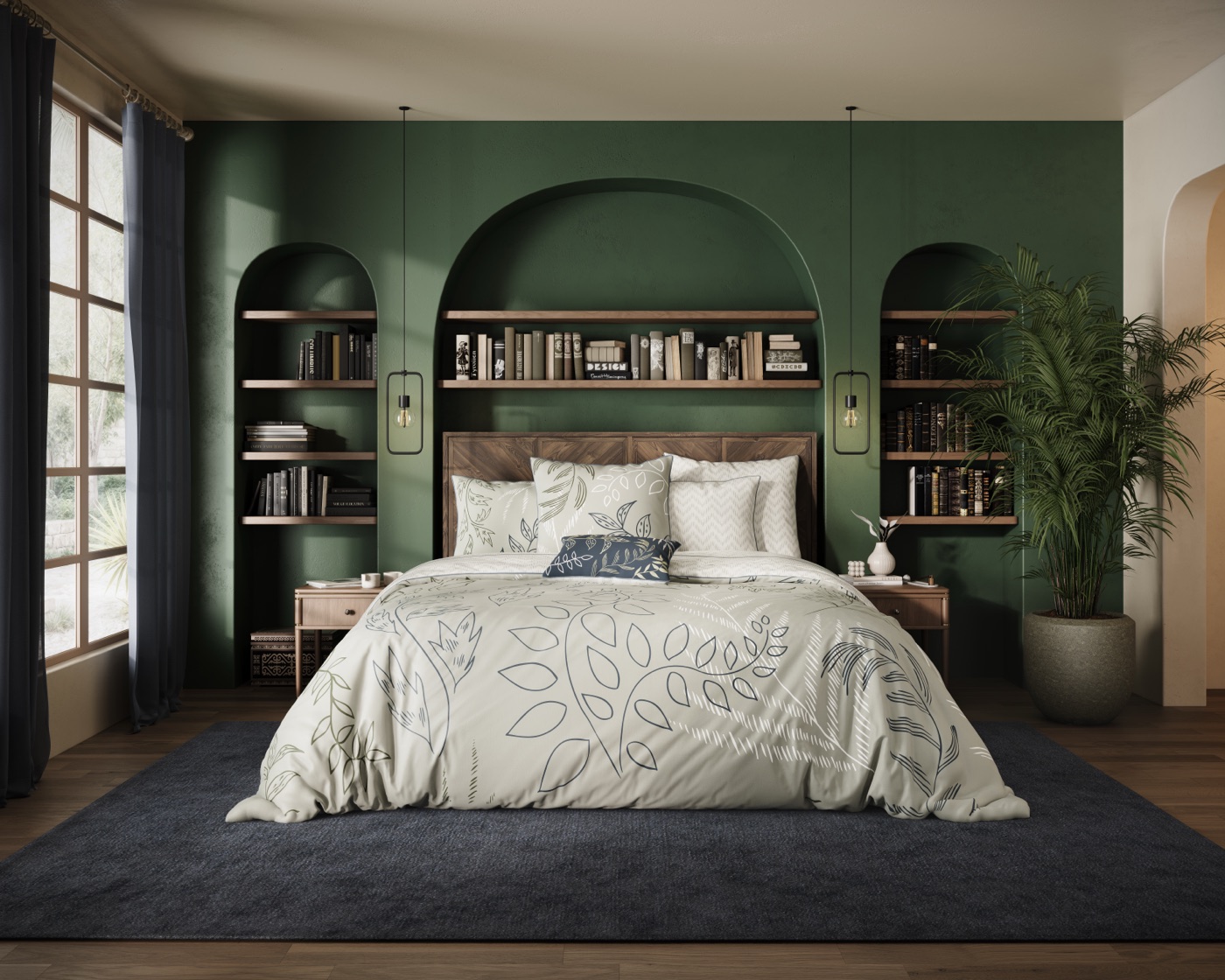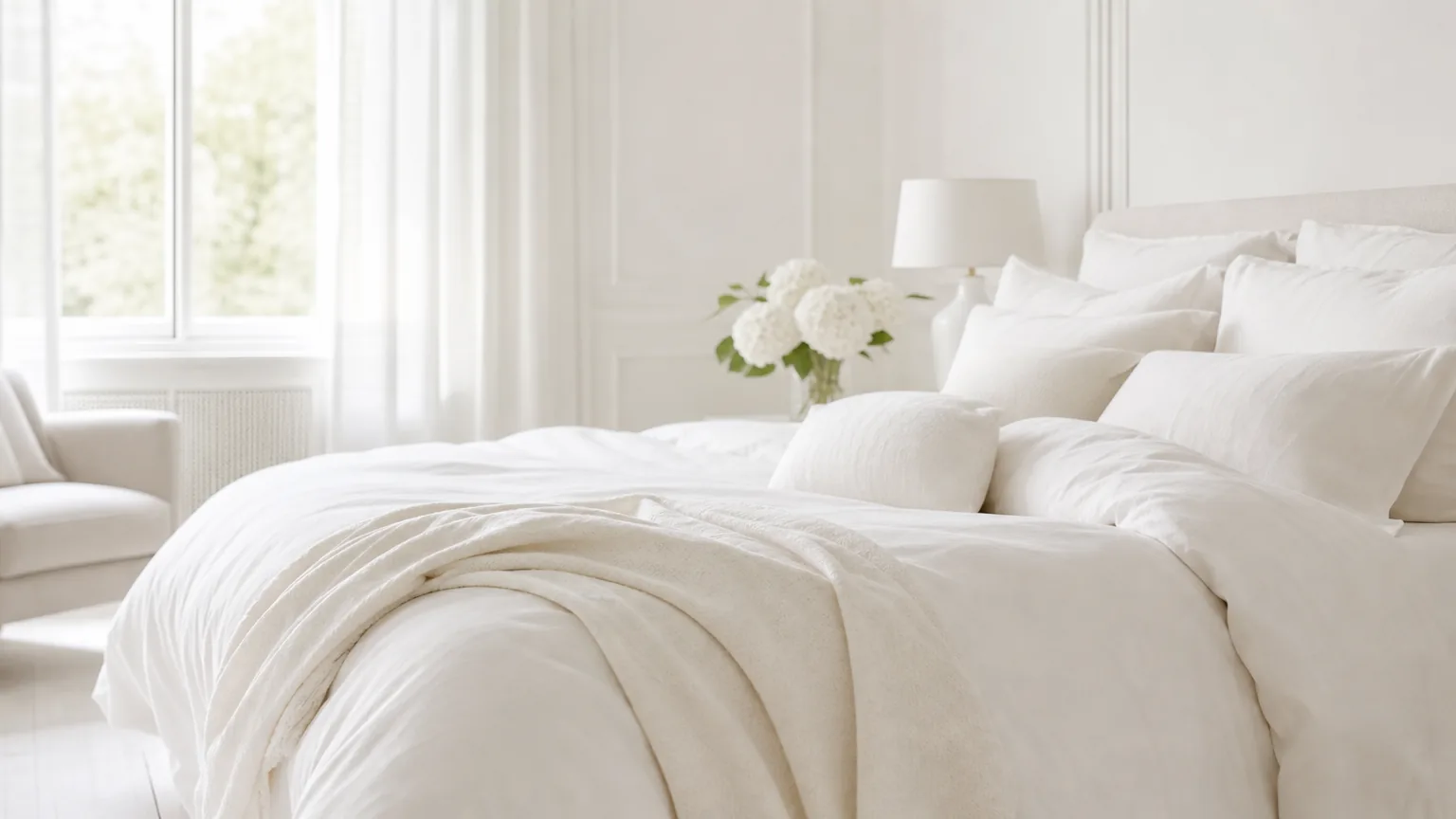
Choose plain if your bedroom already has plenty of character (wallpaper, a statement headboard, coloured furniture) or if you want bed linen that is easy to match and replace; choose patterns if the room is understated and the bed should become the focal point. More often than not, the best solution combines both: a patterned duvet cover with plain sheets and pillowcases that pick up one of its colours.
This article is part of our guide What colour bed linen should you choose?.
Plain or patterned: what each brings
| Criterion | Plain bed linen | Patterned bed linen |
|---|---|---|
| Atmosphere | Calm, clean-lined, hotel feel | Lively, personal, decorative |
| Matching | Goes with everything, easy to mix | Its colours need repeating elsewhere |
| Tiring of it | Unlikely, timeless | More likely, depending on trends |
| Creases and small stains | More visible, especially in light shades | Better disguised by the design |
| Replacing | A worn piece can be replaced on its own | A matching replacement can be hard to find |
When to choose plain
Plain bed linen remains the most flexible base. It is particularly suited to:
- bedrooms already rich in decoration: wallpaper, patterned rugs, an upholstered headboard, artwork;
- small bedrooms, where a single block of colour makes the space feel bigger;
- people who like a change of mood: plain fitted sheets, duvet covers and pillowcases in different colours can be combined endlessly;
- fabrics that already have texture, such as washed linen or cotton gauze, whose grain is enough to bring the bed to life.
Plain does not mean white: sage green, terracotta or deep blue give as much character as a pattern. White bed linen does, however, keep the advantage of hot washes and going with everything.
When to choose patterns
Patterned bed linen adds personality without repainting or changing furniture. It is useful when the bedroom is neutral (white or beige walls, light furniture) and lacks warmth. Each family of patterns creates a different mood:
Geometric patterns and stripes
Fine stripes, checks, gingham, bold geometric designs: they give the bed structure and suit modern or Scandinavian interiors. Fine stripes stay discreet; large checks make a stronger statement.
Floral and botanical patterns
Small ditsy florals, foliage, branches: they soften the room and suit country, bohemian or romantic styles. A light background with a widely spaced design stays restful; a dense, high-contrast print stands out a lot.
Subtle patterns
Polka dots, fine tone-on-tone stripes, embroidery, piping or a ruffle: this is "almost plain", ideal if you can't decide between the two.
Mixing plain and patterned: the rules
Combining patterns and plains can transform a bedroom, as long as there is a common thread. A few tips:
- Only one dominant pattern: usually on the duvet cover, the largest surface of the bed.
- Plains that pick up a colour from the pattern: the fitted sheet and pillowcases in the main or secondary shade of the print.
- Three colours at most across the whole bed, cushions and throw included.
- If you combine two patterns, vary the scale: a large pattern on the duvet, a small pattern or fine stripe on the pillowcases, in the same colour range.
- Avoid doubling up with patterned walls: against busy wallpaper, plain bed linen lets the room breathe.
The most common mistakes: two different large patterns side by side, colours with no link between the duvet cover and the pillowcases, or a high-contrast print in a bedroom that is already small and dark.
Room by room
- Main bedroom: a calm plain base, with a subtle pattern or stripe on the duvet cover for personality.
- Child's bedroom: patterns are perfectly at home here; matching plain sheets let you change the duvet cover without replacing everything as the child grows.
- Guest room: plain, ideally light, suits every taste and is easy to replace.
- Coloured walls: choose your bed linen colour according to the walls; our article which bed linen colour for your wall colour details the combinations.
Texture, an alternative to pattern
To bring a plain bed to life without a print, play with fabrics: the natural crumple of washed linen, the crinkle of cotton gauze, the matt finish of percale or the soft sheen of cotton sateen. Layering two textures in similar tones, for example a linen duvet cover with percale pillowcases, adds depth while staying understated. Soft shades such as pastels work particularly well.
To put your bed together, a bed linen set combines a duvet cover and matching pillowcases; complete it with a plain fitted sheet in the colour of your choice.
In summary
Plain brings calm and flexibility, patterns bring character. Choose plain in a room that is already decorated or small, patterns in a neutral room. To mix the two, keep a single dominant pattern, repeat its colours on plain sheets and pillowcases, and use no more than three colours on the bed.