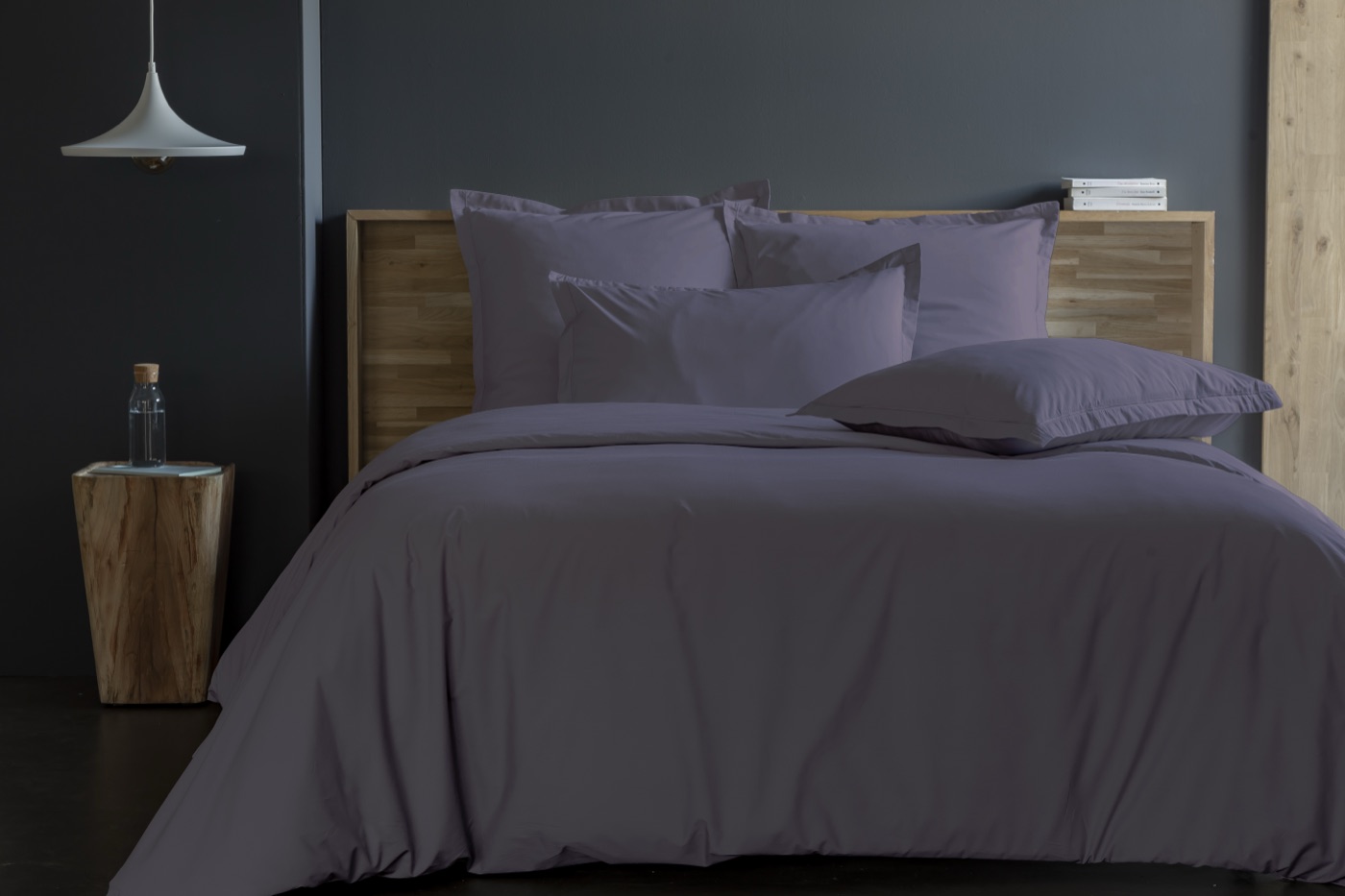
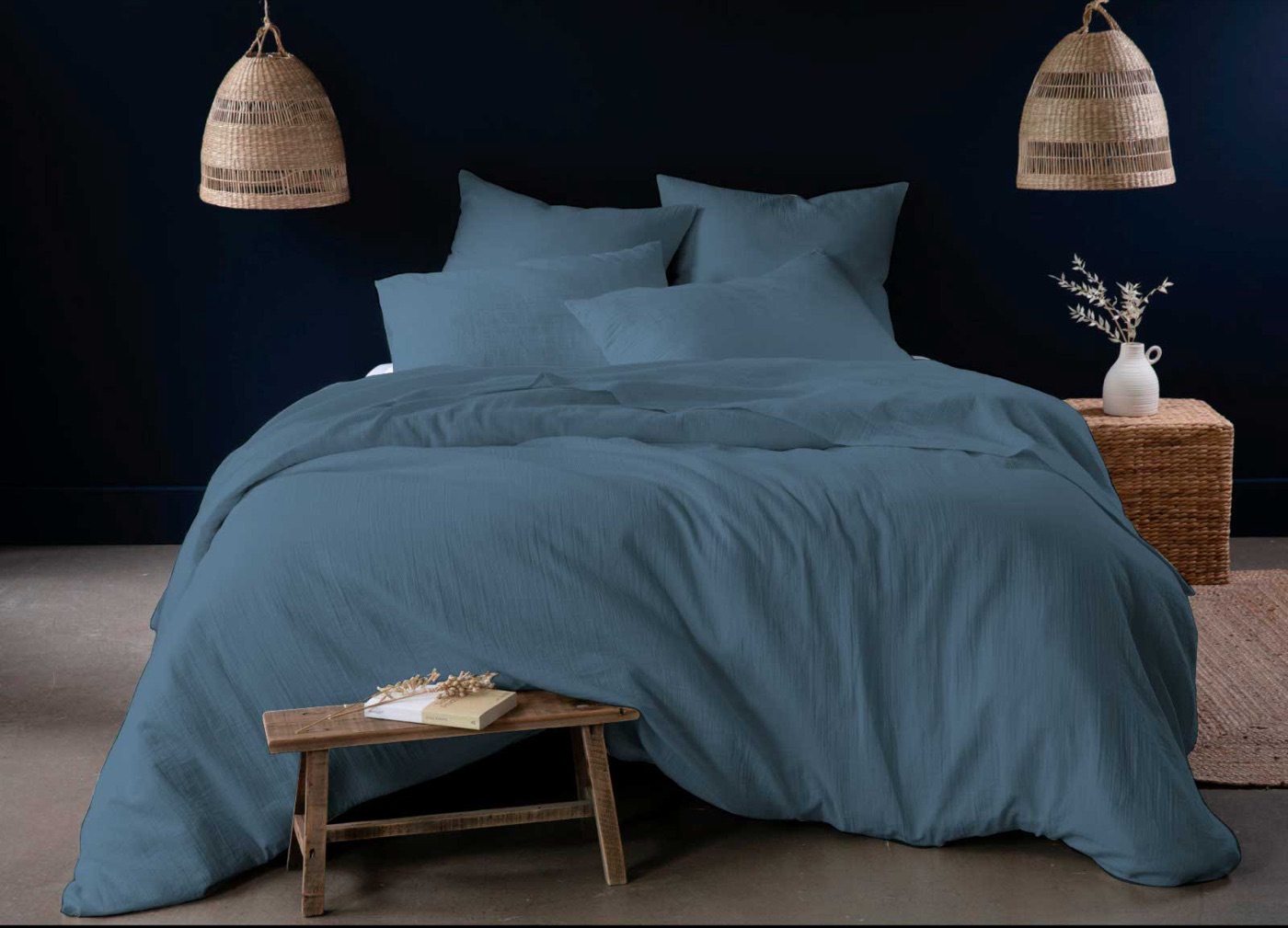
Satin is not a material but a weave: cotton sateen is cotton woven to be smooth and lustrous, whereas silk is a natural fibre produced by the silkworm. Silk is finer, more slippery and more delicate; cotton sateen is stronger, easier to wash and far more affordable.
This article is part of our guide Differences between bed linen materials.
Satin is a weave, not a material
The word "satin" refers to a weave, that is, a way of interlacing threads. In a satin weave, the warp threads pass over several weft threads before going under one. These long stretches of thread on the surface, called floats, make the fabric smooth, soft and slightly lustrous on one side.
This weave can be made with different fibres:
- cotton: this is cotton sateen, widely used for bed linen;
- silk: this is called silk satin or charmeuse, the usual form of silk pillowcases and sheets;
- polyester: a cheap synthetic satin that imitates the look of silk without its properties.
Comparing "satin and silk" therefore mostly comes down to comparing cotton and silk, two natural fibres with different qualities.
Silk, a natural fibre of animal origin
Silk is a protein filament secreted by the silkworm caterpillar to build its cocoon. Mulberry silk, the most widely used in bedding, comes from worms raised and fed on mulberry leaves. Each cocoon yields a continuous thread several hundred metres long, extremely fine and even: this is what gives silk its unmatched softness and sheen.
Its density is measured in momme; to understand what 19, 22 or 25 momme mean, read our article on mulberry silk and momme weight.
Cotton sateen vs silk at a glance
| Criterion | Cotton sateen | Mulberry silk |
|---|---|---|
| Nature | Plant fibre woven as satin | Animal (protein) fibre, often woven as satin |
| Feel | Soft, silky, fluid | Very smooth, slippery, exceptionally fine |
| Sheen | Subtle | Pronounced, luminous |
| Temperature | Moderate, fairly enveloping | Temperature-regulating, cool in summer and cosy in winter |
| Absorbency | High, absorbs sweat well | More moderate |
| Durability | Good, withstands frequent washing | More delicate to friction and washing |
| Washing | Machine 40 °C, 60 °C if the label allows | 30 °C maximum, delicate or hand-wash cycle |
| Price | Affordable | Much higher |
For skin and hair: does silk have an edge?
This is the argument most often made for silk. Its very smooth surface creates less friction than cotton: hair glides instead of tangling and frizzing, and your face shows fewer crease marks in the morning. Silk also absorbs less moisture and fewer night-time skincare products than cotton, which can help preserve skin hydration.
These benefits are most noticeable on the pillowcase, the piece in direct contact with your face and hair. That is why many sleepers keep cotton bed linen and simply add a silk pillowcase; we explain its advantages in why use a silk pillowcase.
Cotton sateen is nonetheless much gentler on the skin than percale or ordinary cotton, thanks to its floats, which limit friction.
Care: two very different requirements
Cotton sateen
- Machine wash at 40 °C, or 60 °C if the label allows, inside out to preserve the sheen.
- Line dry or tumble dry on low; it creases little and rarely needs ironing.
Silk
- Hand wash or use a silk programme at 30 °C maximum, in a mesh bag, with a gentle pH-neutral detergent.
- No bleach, no fabric softener, no tumble dryer; dry flat out of direct sunlight.
- Iron if needed on a low setting, on the reverse. Always follow the care label.
How to tell silk from polyester satin
- The label: it should say "100% silk" or "mulberry silk". "Satin" alone says nothing about the fibre.
- The feel: silk warms up quickly in your hand; polyester stays cooler and can build up static.
- The sheen: silk has a pearly lustre that shifts with the light; polyester shines more uniformly, with a more "plastic" look.
- The price: a very cheap "satin" pillowcase is almost always polyester.
Which one should you choose for your bed?
- For a full bedding set used and washed every week: cotton sateen, soft, durable and easy to live with.
- To look after your hair and skin: a mulberry silk pillowcase, possibly paired with cotton sateen bedding.
- For a luxurious experience and a temperature-regulated bed all year round: silk, accepting more delicate care.
Discover our cotton sateen bed linen and our silk bed linen.
In summary
Satin is a weave; silk is a fibre. Cotton sateen offers a silky feel, good absorbency and easy care at an affordable price. Silk, smoother, more luminous and temperature-regulating, is ideal for skin and hair but needs more care and costs more. Be wary of polyester "satins", which only have the look of silk.