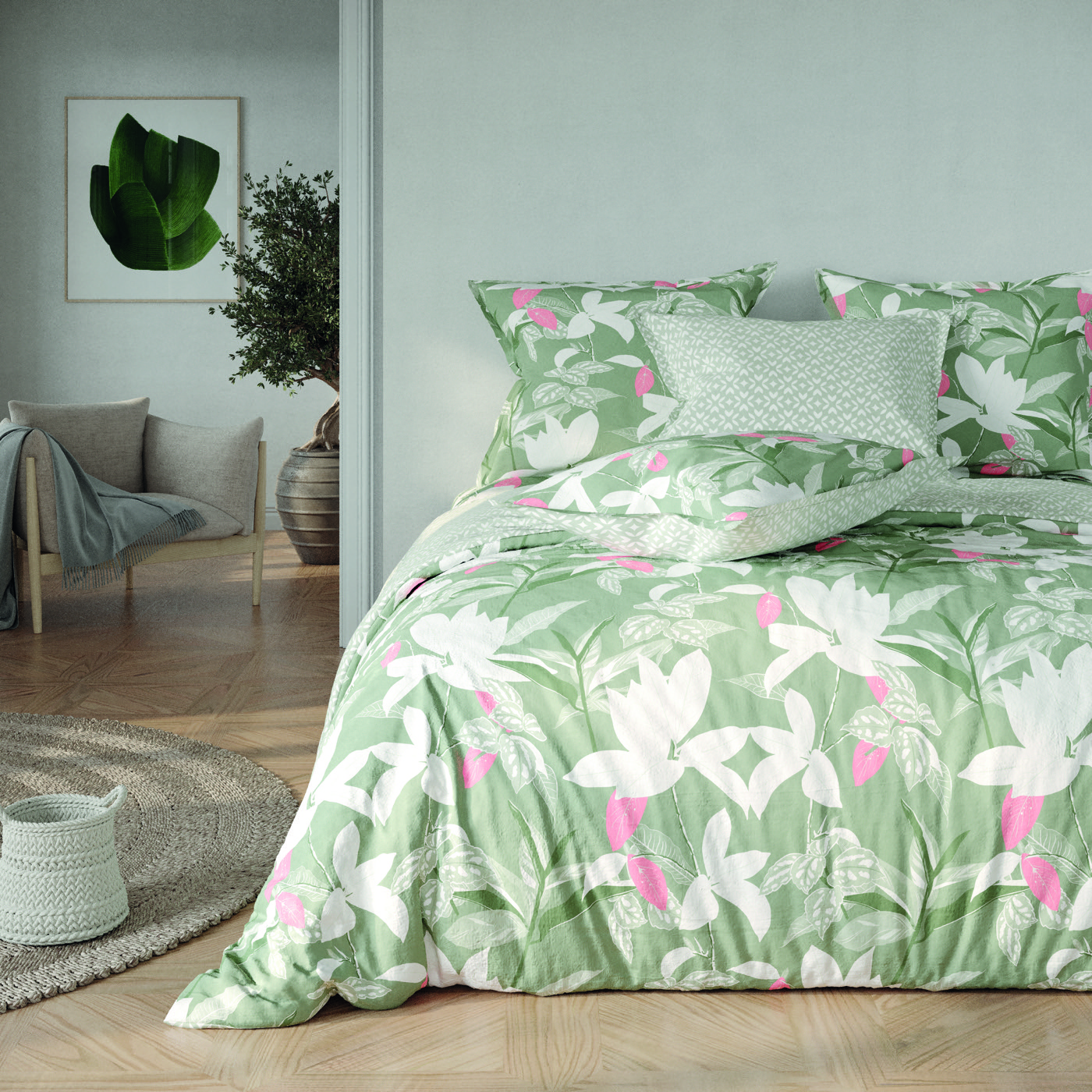
To wash a silk pillowcase, hand wash it in cold or lukewarm water (30 °C maximum) with a pH-neutral silk detergent, or machine wash it on the silk or delicate cycle, inside out and in a mesh bag. Rinse without wringing, blot it in a towel, then dry it flat or on a rack, in the shade, never in the tumble dryer.
This article is part of our guide Household Linen Care: The Complete Guide.
Silk is a protein fibre, similar to hair: heat, friction and harsh detergents dull and weaken it. The general rules in our guide on washing bed and bath linen still apply, with extra gentleness. Properly washed, a silk pillowcase keeps its drape, sheen and softness for a long time.
What you need
- a liquid detergent for silk or wool, pH-neutral, free of enzymes and optical brighteners;
- a clean basin or a sink;
- a mesh laundry bag if you use the machine;
- a large, clean, light-coloured terry towel;
- a drying rack or a padded hanger.
The steps
By hand, the gentlest method
- Read the care label: some silk pillowcases are hand wash only, others tolerate the machine at 30 °C.
- Turn the pillowcase inside out to protect the satin face, the one that touches your skin.
- Fill the basin with cold or lukewarm water, never above 30 °C, and dissolve a small dose of detergent before adding the pillowcase.
- Let it soak for 3 to 5 minutes, no longer: a long soak achieves nothing and can make colours bleed.
- Gently squeeze the fabric in the water, without rubbing or twisting. On a make-up mark, dab with your fingertips.
- Rinse in clean water at the same temperature until no suds remain. A tablespoon of white vinegar in the final rinse removes detergent residue and revives the sheen.
- Blot it in a towel: lay the pillowcase flat, roll everything up and press to absorb the water, without wringing.
In the machine
- Put the inside-out pillowcase in a mesh bag and wash it alone or with other delicate items of a similar colour.
- Choose the silk, wool or delicate programme, cold or 30 °C maximum.
- Reduce the spin to 400 rpm, or switch it off.
- Take the pillowcase out as soon as the cycle ends to avoid set-in creases.
Drying and ironing
Lay the pillowcase flat on a dry towel or on a rack, away from direct sunlight and radiators: UV rays yellow pale silk and fade dark shades. It dries in a few hours. If ironing helps, iron it inside out while still slightly damp, with the iron on the silk setting (one dot), or remove creases with steam without touching the fabric.
By material
The word "satin" refers to a weave, not a fibre: check the composition before washing.
- Mulberry silk (charmeuse): the most common for pillowcases, to be hand washed or washed on the silk cycle, 30 °C maximum.
- Washed or sand-washed silk: matt in appearance and slightly more tolerant, but subject to the same temperature and drying rules.
- Dark-coloured silk: wash it alone the first few times, as it may bleed slightly.
- Cotton sateen: often chosen as an alternative to silk, it is machine washable at 40 °C; see how to wash cotton sateen without damaging it and our cotton sateen pillowcases and sheets.
- Polyester satin: this is not silk; it can go in the machine at 30 or 40 °C, but it lacks the breathability of silk.
Mistakes to avoid
- A standard or "bio" detergent: its enzymes, proteases, attack the proteins in silk and make it rough.
- Fabric softener, which leaves a greasy film and dulls the sheen.
- Bleach and whitening products, percarbonate included: they yellow and weaken silk irreversibly. Never mix bleach with vinegar, an acid or ammonia, as the mixture releases toxic gases.
- Twisting or spinning hard: wet fibre is more fragile and keeps sharp creases.
- The tumble dryer and the sun, which shrink, yellow and dull the fabric.
- Removing stains without testing: always try a product on an inside seam before applying it to the visible side.
For your other silk items, sheets or duvet covers, follow our complete method to wash silk. And to replace or add to your pillowcase, our selection of silk bed linen brings together pillowcases and bedding sets in this fibre.
Frequently asked questions
How often should you wash a silk pillowcase?
Once a week, like a cotton pillowcase: every night it collects sebum, sweat and cream residue. If you have oily skin or sleep with make-up on, wash it every three or four days. Having two pillowcases lets you alternate without rushing.
Can you machine wash a silk pillowcase?
Yes, if the label allows it: silk or delicate programme, cold or 30 °C, in a mesh bag, with a silk detergent and a low spin. Hand washing remains the gentlest option and extends the life of the pillowcase.
Why has my silk pillowcase become rough or dull?
This is usually a sign of an enzyme detergent, water that was too hot, excess detergent not rinsed out or drying in the sun. A rinse in cold water with a tablespoon of white vinegar can restore some suppleness; fibre damaged by heat, however, cannot be recovered.
In summary
A silk pillowcase should be washed every week, ideally by hand in water at 30 °C maximum, with an enzyme-free silk detergent and no fabric softener. In the machine, choose the silk programme, a mesh bag and a low spin. Do not wring it, dry it flat in the shade and iron it inside out at a low temperature: it will stay soft and lustrous.