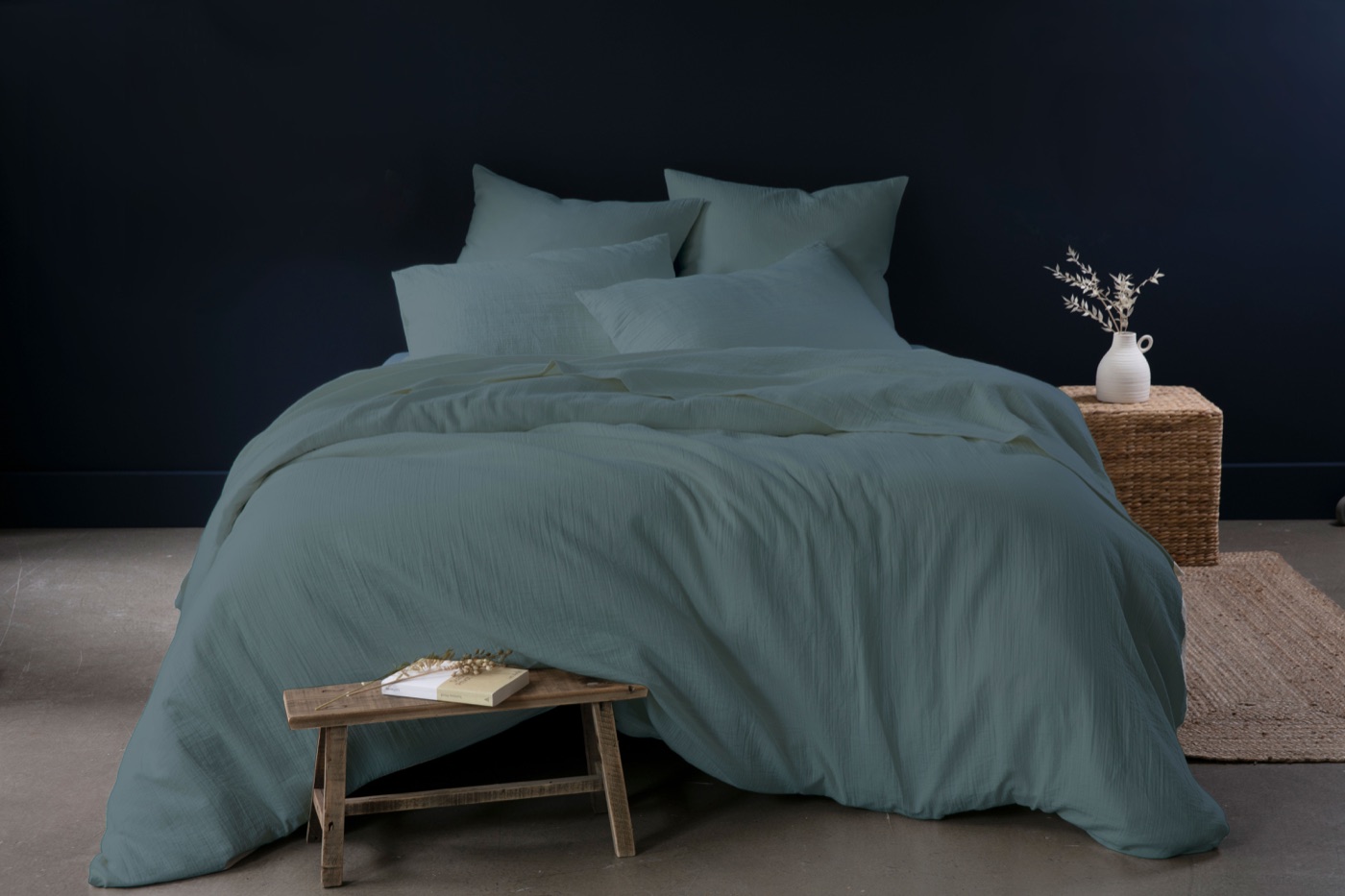
To whiten laundry without bleach, the most effective method is sodium percarbonate: one to two tablespoons straight into the drum with your detergent, on a wash of at least 40°C and ideally 60°C, or a soak of a few hours in a basin of hot water for yellowed linen. It releases active oxygen that whitens without chlorine and breaks down into water, oxygen and sodium carbonate. Hydrogen peroxide, washing soda and sunlight complete the toolkit.
This article is part of our guide Household Linen Care: The Complete Guide.
This article complements our guide to whitening laundry, focusing here on chlorine-free solutions. Bleach whitens quickly, but over time it weakens cotton, can turn it yellow and does not remove the greasy residue that dulls white fabric.
What you need
- Sodium percarbonate (often sold as "active oxygen" or "oxygen bleach").
- Gloves: percarbonate and washing soda irritate skin and eyes.
- A basin and hot water for soaking.
- Optional: 3% hydrogen peroxide, washing soda, white vinegar for the rinse.
The steps
- Read the care label and sort: whites only, with no untested embroidery or coloured piping.
- For linen that is simply dull, add one to two tablespoons of percarbonate straight into the drum with your usual detergent.
- Run a programme at 40°C minimum, 60°C for cotton sheets and towels if the label allows: below 40°C, percarbonate does very little.
- For yellowed linen, soak first: one tablespoon per 4 to 5 litres of hot water (follow the dose on the pack), from 2 hours to overnight, then wash as usual.
- For the rinse, you can pour 10 cl of white vinegar into the softener compartment to dissolve the limescale that greys laundry.
- Air dry, in the sun if possible: UV light has a natural whitening effect on cotton and linen.
| Method | Typical dose | Temperature | Use for |
|---|---|---|---|
| Sodium percarbonate | 1 to 2 tbsp in the drum | 40 to 60°C | Dull or yellowed whites, organic stains |
| 3% hydrogen peroxide | 100 ml in the drum | 40 to 60°C | Brightening whites, targeted soak |
| Washing soda | 1 to 2 tbsp with the detergent | 40 to 60°C | Greasy laundry, hard water |
| Bicarbonate of soda | 2 to 3 tbsp in the drum | Any | Deodorising, light brightening |
| White vinegar | 10 cl in the rinse | Any | Laundry greyed by limescale |
| Sunlight | Air drying | – | Finishing touch on white cotton and linen |
For the detailed methods, see whitening laundry with hydrogen peroxide and whitening laundry with washing soda.
By fabric
- White cotton: the fabric that tolerates percarbonate best, up to 60°C. White cotton percale easily regains its brightness.
- Cotton sateen: same treatment, but prefer 40°C and a moderate spin to keep the sheen.
- White linen: percarbonate is fine at 40°C; air drying is recommended.
- Terry cotton: percarbonate and 60°C suit white towels well; avoid fabric softener, which dulls them and reduces absorbency.
- Silk and wool: no percarbonate, no washing soda, no concentrated bicarbonate. These alkaline products damage protein fibres. Follow the label, wash cold with a delicates detergent or take the item to a dry cleaner.
Mistakes to avoid
- Mixing products. Never mix bleach with vinegar, an acid or ammonia: the mixture gives off toxic gases. If you have used bleach, rinse before any other treatment.
- Adding vinegar and percarbonate at the same time: vinegar cancels part of its effect. Keep vinegar for the rinse.
- Washing cold with percarbonate: it is almost inactive below 40°C.
- Overloading the drum or overdosing detergent: residue left in the fibres turns laundry grey.
- Handling percarbonate or washing soda with bare hands, or leaving them within children's reach.
To stop whites dulling again: wash whites separately, dose detergent according to water hardness (the harder the water, the greyer laundry gets without vinegar in the rinse), dry quickly and store linen completely dry, away from direct light and damp.
White cotton that tolerates 60°C is the easiest to keep bright. Our selection of white duvet covers brings together designs suited to these chlorine-free methods.
Frequently asked questions
Is sodium percarbonate as effective as bleach?
On yellowed or dull linen, yes, provided you wash at 40°C minimum or soak. It works more slowly than bleach, but without weakening the fibres or leaving a smell.
Can it be used with a septic tank?
Yes, at normal doses: it breaks down into water, oxygen and sodium carbonate. Simply avoid repeated overdosing.
How do you whiten a delicate fabric such as silk?
Without any whitening product at home. A cold wash with a delicates detergent and drying flat in the shade are enough; for marked yellowing, a dry cleaner is safer.
In summary
Without bleach, sodium percarbonate at 40-60°C is the foundation: in the drum for routine care, as a soak for yellowed linen. White vinegar in the rinse against limescale, sun drying as a finish. Never on silk or wool, always with gloves, and never mixed with bleach.