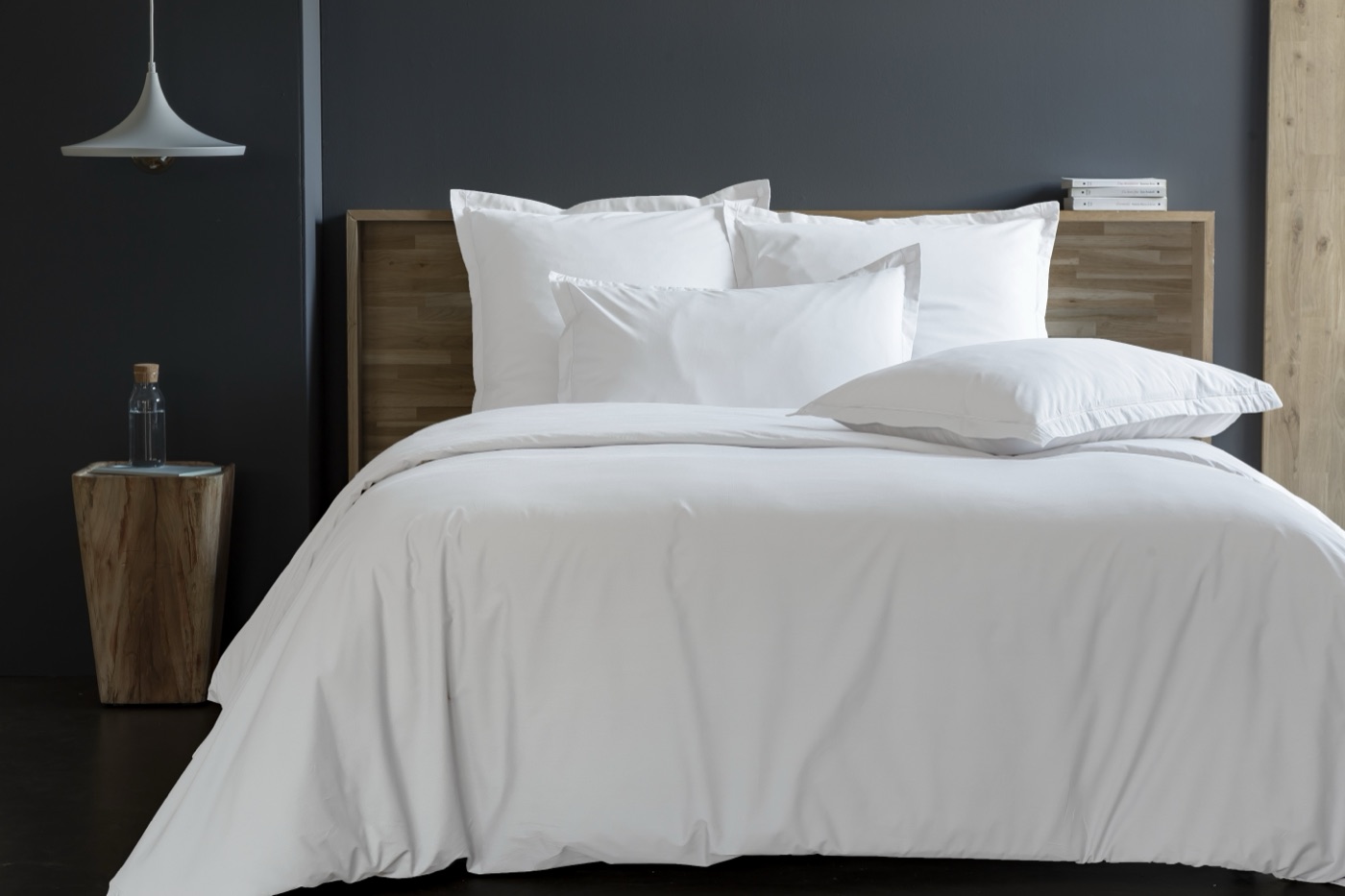
To protect linen from moths, always store it clean, in closed covers or boxes, in a cupboard you air and vacuum regularly, and add repellents such as cedar wood or lavender. If moths have struck, a wash at 60 °C where the label allows, or a spell in the freezer, kills larvae and eggs. Clean linen is the most effective protection.
This article is part of our guide Household Linen Care: The Complete Guide.
This guide is part of our feature on folding and storing household linen. Clothes moths are small insects whose larvae alone damage textiles: they feed on keratin, found in wool, silk, feathers and down, and on the soiling left on fabric.
What you need
- closed cotton covers or airtight boxes for wool and silk;
- cedar wood blocks or rings, or sachets of dried lavender;
- a vacuum cleaner with a crevice tool for corners and shelves;
- freezer bags to treat small items;
- possibly a pheromone trap to spot an infestation.
Step by step
- Wash before storing: larvae are drawn to sweat, skin flakes and food stains. Clean linen is far less at risk.
- Empty and vacuum the cupboard, paying attention to corners, grooves and the underside of shelves, then wipe it with a damp cloth and let it dry.
- Store sensitive pieces in closed containers, wool throws, silk linen, feather pillows: a well-closed cotton cover or an airtight box, with fully dry linen.
- Add repellents: cedar wood or lavender sachets on the shelves. Lightly sand the cedar each season to refresh its scent and replace the lavender once it no longer smells.
- Air and move the linen every two or three months: moths like dark, quiet places that are never disturbed.
- Monitor: a pheromone trap shows whether male moths are present. It helps detect the problem but does not replace cleaning.
If moths are already there
- Hot wash: 60 °C destroys eggs and larvae, for textiles whose label allows it.
- Freezing: for wool and silk that cannot take heat, seal the dry item in a closed bag and leave it at least 72 hours in the freezer at -18 °C, then let it return to room temperature in the bag before taking it out.
- Thorough cupboard cleaning: vacuum, empty the vacuum bag outdoors and wash the surfaces before putting things back.
- Insecticides: if you use them, follow the instructions strictly, never spray them on bed linen and air the room thoroughly.
By fabric
- Wool (throws, blankets): the main target. Store in a closed cover out of season, washed or cleaned according to the label beforehand.
- Silk: an animal protein, it also attracts larvae; store it clean, in a cotton cover, away from light, and follow the label (cold wash or 30 °C). See our silk bed linen.
- Feather or down duvets and pillows: vulnerable; air them often, keep them in their storage bag and follow their label for washing. Our guide on how to wash a duvet explains the precautions.
- Cotton and linen: rarely attacked on their own, unless stained or blended with wool. A wash before storage is usually enough.
Mistakes to avoid
- Storing used or stained linen: soiling feeds the larvae, even on cotton.
- Pouring essential oil directly on the fabric: it can leave lasting stains. Apply it to a piece of wood or a sachet placed nearby instead.
- Relying only on lavender or cedar: they are repellents and do not kill eggs or larvae already present.
- Sealing damp linen in an airtight box: you avoid moths but risk mould.
- Leaving the cupboard closed for months: darkness and quiet encourage egg-laying.
The same storage rules also keep light-coloured linen bright: see how to store white linen without it yellowing. To renew your sheets and covers, all our bed linen comes in cotton, linen and silk.
Frequently asked questions
Do moths eat cotton?
Rarely. Their larvae digest the keratin in animal fibres. They can, however, hole cotton or linen stained with sweat or food, or fabric blended with wool. Clean linen hardly attracts them.
Does lavender really keep moths away?
It has a modest repellent effect, useful as prevention in a clean cupboard. It does not destroy an infestation: for that you need to wash, freeze or thoroughly clean the storage space.
How long should you freeze a textile to kill moths?
At least 72 hours at -18 °C, in a closed bag and on a dry textile. For a thick item such as a wool blanket, allow a week for the cold to reach the core.
In summary
Moths look for wool, silk, down and dirty linen stored in the dark. Wash before storing, seal sensitive pieces in covers or boxes, air and vacuum the cupboard, and add cedar or lavender. If moths strike, wash at 60 °C if the label allows, or freeze, then clean the storage space thoroughly.