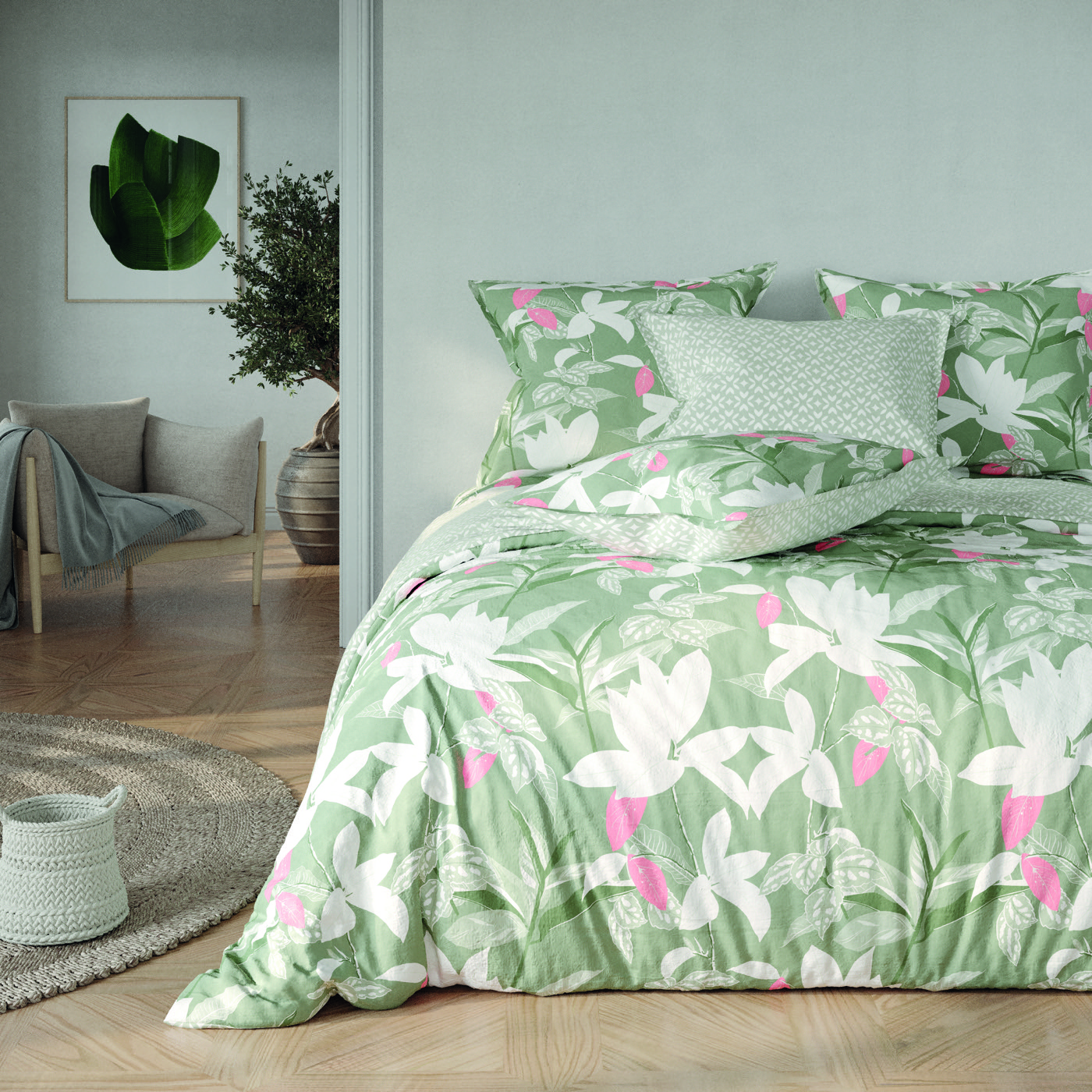
To stop sheets from creasing, everything happens as they come out of the machine: a drum that is filled but not packed, a moderate spin of around 800 to 1,000 rpm, then laundry taken out straight away, shaken and hung up taut. Folded as soon as it is dry, or even still very slightly damp, it stays almost smooth without an iron. Fabric matters too: cotton percale and cotton sateen crease less than linen.
This article is part of our guide Household Linen Care: The Complete Guide.
This article is part of our guide to drying and ironing your bed and bath linen.
Why sheets crease
Cotton and linen are cellulose fibres: when wet, they become supple and take whatever shape they are given. As they dry, they keep it. A sheet squashed in an overfilled drum, spun at full speed and then left in a heap for an hour therefore dries with all its creases set.
In other words, washing does not cause creases; the way the laundry dries does. Every step that leaves it packed or twisted while damp adds more marks.
What you need
- a washing machine with adjustable spin speed;
- a drying rack or a line long enough to hang a sheet over two lines;
- clothes pegs;
- optionally, a water spray to smooth the last creases.
Step by step
- Do not pack the drum. For bed linen, a load at half to two thirds of capacity gives the sheets room to move. A full bedding set for a double bed is often enough to fill a 7 kg machine.
- Lower the spin speed. Choose the cotton programme and go down to 800 or 1,000 rpm, or use the easy-iron option if your machine has one.
- Unload as soon as the cycle ends. This is the most effective habit: a few minutes are fine, an hour in the drum sets the creases.
- Shake each piece sharply two or three times, then pull on the hems and seams to bring the fabric back on the straight grain.
- Hang it flat. Fold the sheet in half over two lines, hems aligned, and peg the corners so its weight pulls it taut. Hang pillowcases by the seams and duvet covers by the bottom edge.
- If the care label allows a tumble dryer, reduce the load, choose a low temperature and take the laundry out while still slightly damp to finish in the open air.
- Fold as soon as it is dry, smoothing each fold with the flat of your hand, then store it under a pile: the weight of the other sheets does the rest.
By fabric
| Fabric | Tendency to crease | Tip |
|---|---|---|
| Cotton percale | Moderate | Gentle spin, prompt unloading, dry taut |
| Cotton sateen | Low | Dry flat, fold quickly |
| Washed linen | High, it is part of its look | Gentle spin, embrace a soft crumpled look |
| Cotton gauze | Deliberately crinkled texture | Do not iron, just shake |
| Cotton flannel | Low | Dry flat, avoid high heat |
Cotton percale, a tight plain weave, keeps a crisp look if it dries taut. Cotton sateen, more fluid, slides and marks even less. Washed linen always creases a little: that is its charm, and we explain in should you iron linen or leave it creased how to make the most of it.
Mistakes to avoid
- overloading the drum to save a cycle;
- spinning sheets at 1,400 rpm;
- leaving wet laundry waiting in the machine;
- running the tumble dryer on high heat until bone dry: creases set and fibres wear;
- using too much detergent, which stiffens fabric: half a glass of white vinegar in the softener drawer softens better. Never mix vinegar with bleach, as the mixture releases a toxic gas.
For easy-care sheets in everyday use, a well-made cotton percale remains the simplest choice. Browse our bed linen collection in percale, sateen, washed linen and cotton gauze.
Frequently asked questions
What spin speed should I use for sheets?
Between 800 and 1,000 rpm: the laundry comes out dry enough to dry quickly, without being crushed against the drum wall.
How can I rescue sheets that are already creased?
Mist them lightly with water and hang them up taut, or put them in the tumble dryer for ten minutes with a damp flannel. We explain these tricks in smoothing a duvet cover without an iron.
Are there sheets that never crease?
Polyester-cotton blends crease less but breathe less well. No natural fibre is crease-free; cotton sateen is the one that marks the least.
In summary
An unpacked drum, a spin of 800 or 1,000 rpm, prompt unloading, sheets shaken and hung taut, folding as soon as they are dry: these simple habits prevent most creases. Choose percale or sateen if you want a crisp bed without an iron, linen if you love a natural crumpled look.