















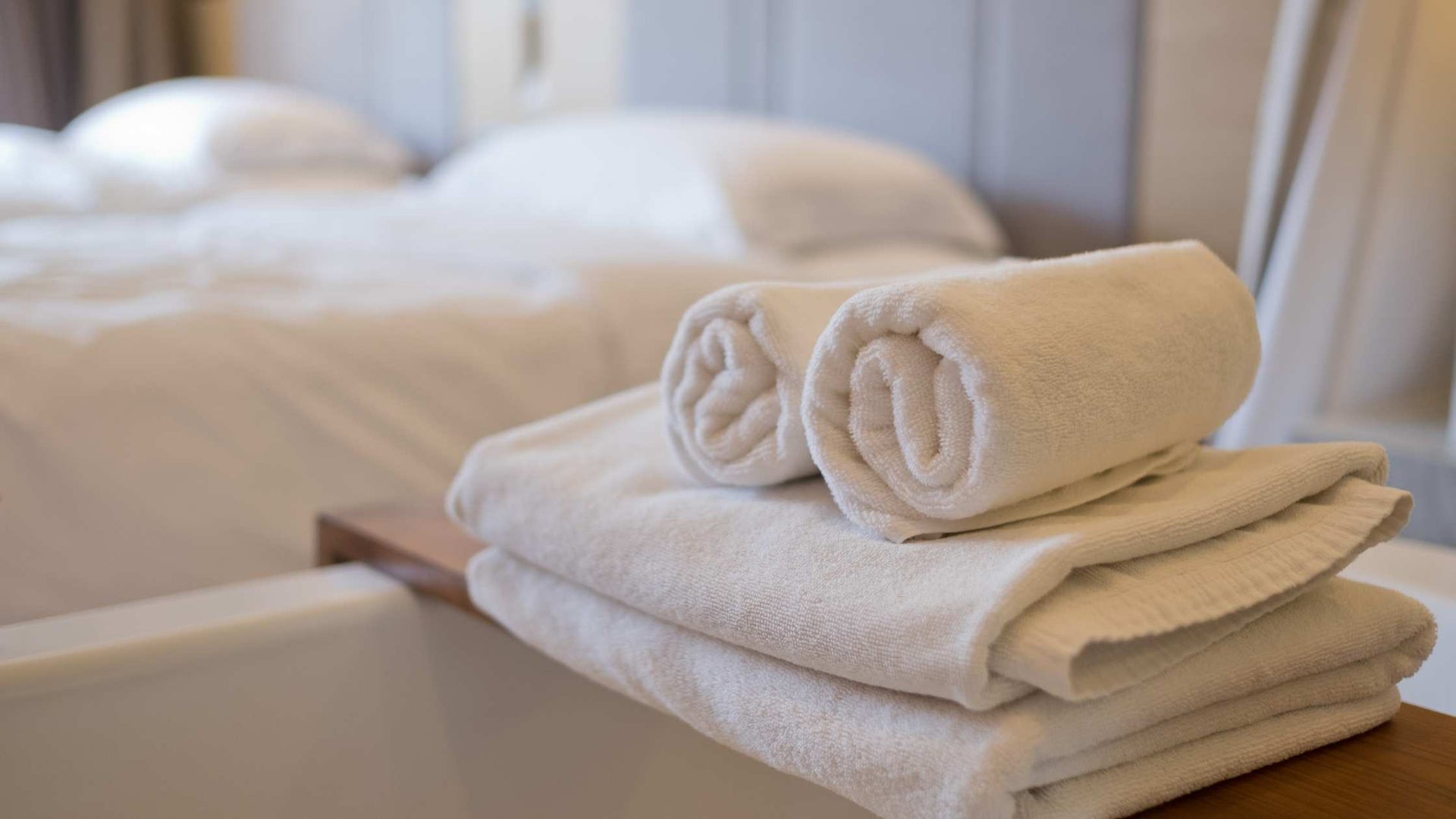
You should switch to a clean bath towel every three to four uses, which means once or twice a week if you shower daily. Replacing it for good is not a matter of dates but of wear: a towel that no longer absorbs, stays rough or keeps a smell after washing has had its day.
This article is part of our guide How to choose bath linen?.
Changing a towel or replacing it: two different questions
“When should I change my bath towels?” really hides two questions. The first is about hygiene: how many times can you use a towel before it goes in the wash? The second is about wear: after how long should you buy new bath linen?
The two are connected. A towel that is washed too rarely wears out faster, and a worn towel dries badly, which encourages damp and germs.
How often should you use a clean towel?
Every time you use a towel, you leave dead skin cells, sebum and soap residue on it. Kept damp in a poorly ventilated bathroom, it becomes a breeding ground for bacteria and mould. Our article on how often to wash bath towels gives the right temperature for each item.
| Item | Swap for a clean one |
|---|---|
| Bath towel or bath sheet | Every 3 to 4 uses |
| Hand or face towel | Every 2 to 3 days |
| Washcloth | After 1 to 2 uses |
| Bath mat | Once a week |
| Gym towel | After every use |
Some situations call for changing towels more often:
- someone ill in the household, or a skin infection: a clean towel every time, washed at 60 °C and never shared;
- a towel that takes more than a day to dry;
- sensitive or acne-prone skin, for the face towel;
- a musty smell, even before the third use.
Signs that a towel needs replacing
A good-quality towel that is well looked after often lasts several years. Rather than a date, watch for these signs:
- It no longer absorbs: water slides off instead of soaking in, a sign that the fibres are clogged or damaged.
- It stays rough despite proper care.
- It keeps a smell of damp as soon as it gets wet, even straight after washing.
- It has black spots: this is mould, often impossible to remove completely.
- It is worn: pulled loops, thin see-through patches, frayed edges or holes.
Before throwing away a smelly towel, try a restoring wash: the causes and fixes are explained in our article on towels that smell bad after washing.
How long does a bath towel last?
A lifespan of two to five years is often quoted, but it varies widely with the quality of the terry cotton, the weight, how many towels are in rotation and how they are washed. A dense towel washed at the right temperature without too much detergent lasts much longer than a thin one washed too hot and dried on a scorching radiator.
A towel that has gone stiff does not necessarily need replacing: most of the time, detergent, fabric softener or limescale build-up makes it feel like cardboard. Our tips to make rough towels soft again are often enough to bring back their softness.
Making your towels last longer
- Hang the towel unfolded after each use, never in a heap or folded while damp.
- Ventilate the bathroom so moisture can escape.
- Dose detergent according to water hardness and avoid fabric softener, which reduces absorbency.
- Do not overload the drum: the laundry needs room to rinse properly.
- Plan at least two sets per person so you can alternate without waiting for a wash to finish.
What to do with old towels?
A worn but clean towel does not have to end up in the bin. Cut up, it makes excellent cleaning or DIY rags. Animal shelters often accept used bath linen, and textile collection points take items too damaged to reuse so they can be recycled.
To renew your bath linen in one go and keep matching pieces, a bath linen set brings together hand towels and bath sheets in the same colour.
In summary
Use a clean bath towel every three to four uses, more often in case of illness, sport or slow drying. Replace it when it no longer absorbs, keeps a smell after washing, shows mould or is visibly worn. Drying it flat, dosing detergent properly and rotating several sets will help it last for years.
