















White vinegar does not bleach like a chlorine product: it dissolves the limescale and detergent residue that make white laundry dull and grey. Pour 100 ml of 8% white vinegar into the softener drawer, or soak the laundry for one hour in a basin of hot water with a glass of vinegar, then wash as usual.
This article is part of our guide Household Linen Care: The Complete Guide.
This tip is one of the gentle methods in our guide to whitening laundry. It works best on linen that has turned dull or stiff because of hard water, and far less on laundry yellowed by sweat or age.
What you need
- Distilled white vinegar at 8% (14% cleaning vinegar should be diluted by half before use).
- A basin and hot water, around 40 °C, for soaking.
- Your usual detergent, without fabric softener.
- Gloves if you have sensitive skin or are handling concentrated cleaning vinegar.
Step by step
- Read the care label of each item and, for delicate textiles, test the diluted vinegar on a hidden area (hem, inner fold).
- For dull laundry, fill a basin with 5 litres of hot water, add a glass (about 200 ml) of white vinegar and soak the laundry for one hour, stirring from time to time.
- Wring lightly and put the laundry in the washing machine drum with your usual detergent at the normal dose.
- Pour 100 ml of white vinegar into the softener drawer: it is released during the rinse, removes detergent residue and softens the fibres without coating them.
- Run the programme suited to the fabric: 60 °C for white cotton sheets if the label allows it, 40 °C otherwise.
- Air-dry, ideally outdoors: the vinegar smell disappears completely as the laundry dries.
For routine care, 100 ml in the drawer with every white wash is enough. Avoid pouring vinegar straight into the drum with the detergent: an acid present from the start of the wash reduces the cleaning agents' effectiveness.
By fabric
- Cotton (percale, sateen): vinegar is perfectly suitable, for soaking and rinsing. A sheet in cotton percale keeps its crisp feel and bright white.
- Linen: a vinegar rinse limits the stiffness caused by limescale and makes the fabric softer wash after wash.
- Terry cotton: 100 ml in the rinse restores fluffiness to towels, which conventional softener makes less absorbent.
- Silk and wool: follow the label strictly; at most one tablespoon of vinegar in cold rinse water, never a hot soak.
- White laundry stained by dye transfer: vinegar will not bring back the original white; sodium percarbonate is better suited to that case.
Mistakes to avoid
- Mixing vinegar and bleach: the mixture releases chlorine gas, which is toxic. Never use them together, in the same cycle or in the same basin. The same rule applies to any other acid or to ammonia with bleach.
- Putting vinegar and baking soda in the same drawer: they neutralise each other as they fizz and lose their effect. If you use both, baking soda in the wash, vinegar in the rinse.
- Using concentrated vinegar at a high dose in every wash: over time, the acid can wear some rubber seals in the washing machine. 100 ml diluted in the rinse water remains a reasonable dose.
- Expecting vinegar to remove old yellowing or sweat rings: it brightens, it does not bleach.
- Replacing white vinegar with wine or cider vinegar, which can leave coloured marks.
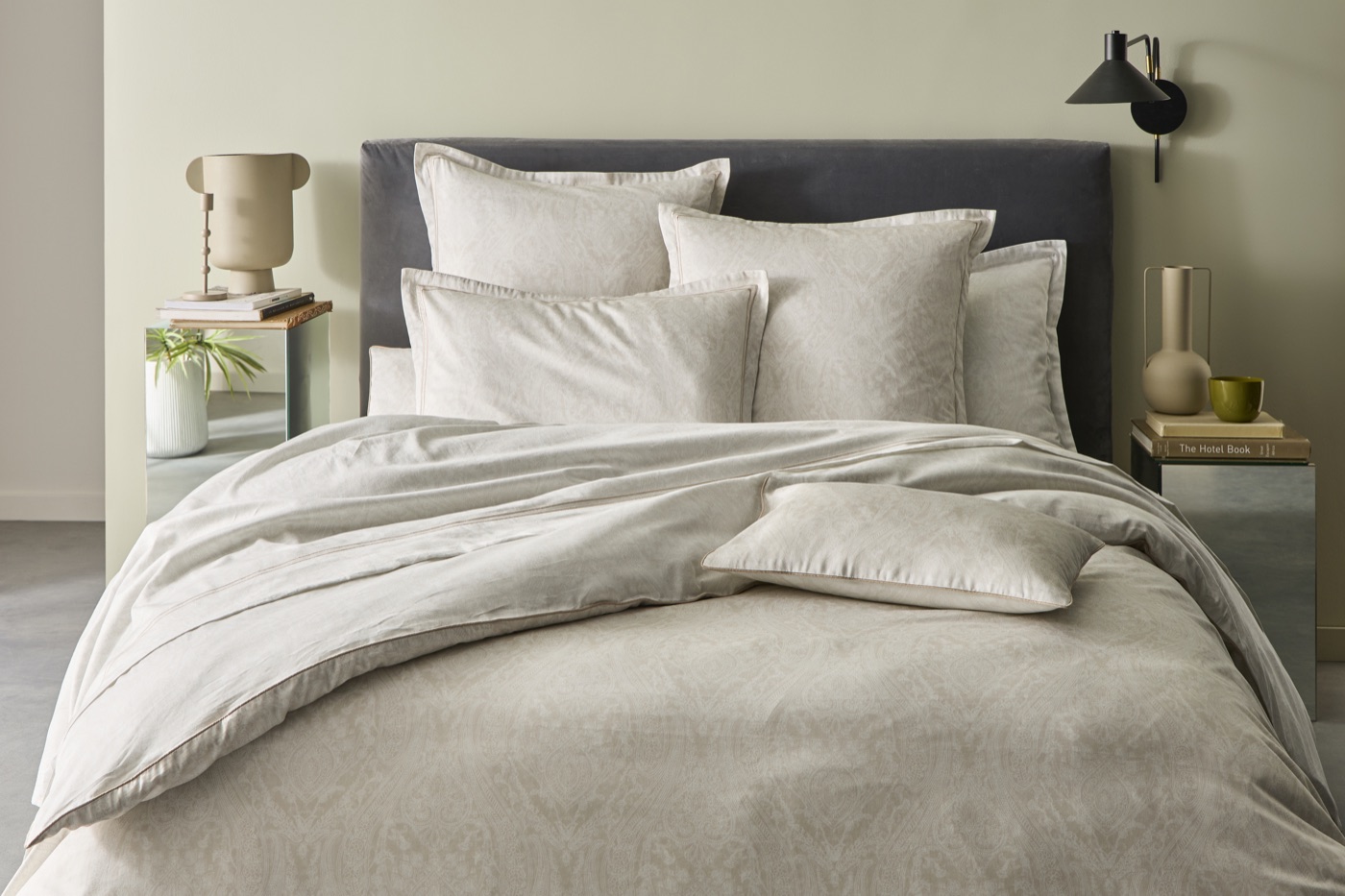
For a light-coloured bed that goes through the machine often, a white duvet cover in cotton copes very well with a white vinegar rinse at every wash.
Frequently asked questions
Is white vinegar a good fabric softener?
For household linen, yes: it removes the limescale and detergent residue that make fibres rough, without leaving a greasy film. Towels stay more absorbent. The full comparison is in our article fabric softener or white vinegar.
Does white vinegar damage laundry?
Diluted in rinse water, no. Just avoid pouring it neat onto fabric and letting it dry, and using it hot and concentrated on silk or wool.
How do you whiten white laundry that has turned grey?
Greyness usually comes from too much detergent, limescale or washing with colours. A vinegar soak followed by a 60 °C wash with slightly less detergent is often enough to bring back a clean white.
In summary
White vinegar brightens white laundry by removing limescale and detergent residue: a glass in a basin of hot water for a one-hour soak, or 100 ml in the softener drawer at every wash. Never with bleach, never mixed with baking soda in the same drawer, and always a test on a hidden area for delicate textiles.



