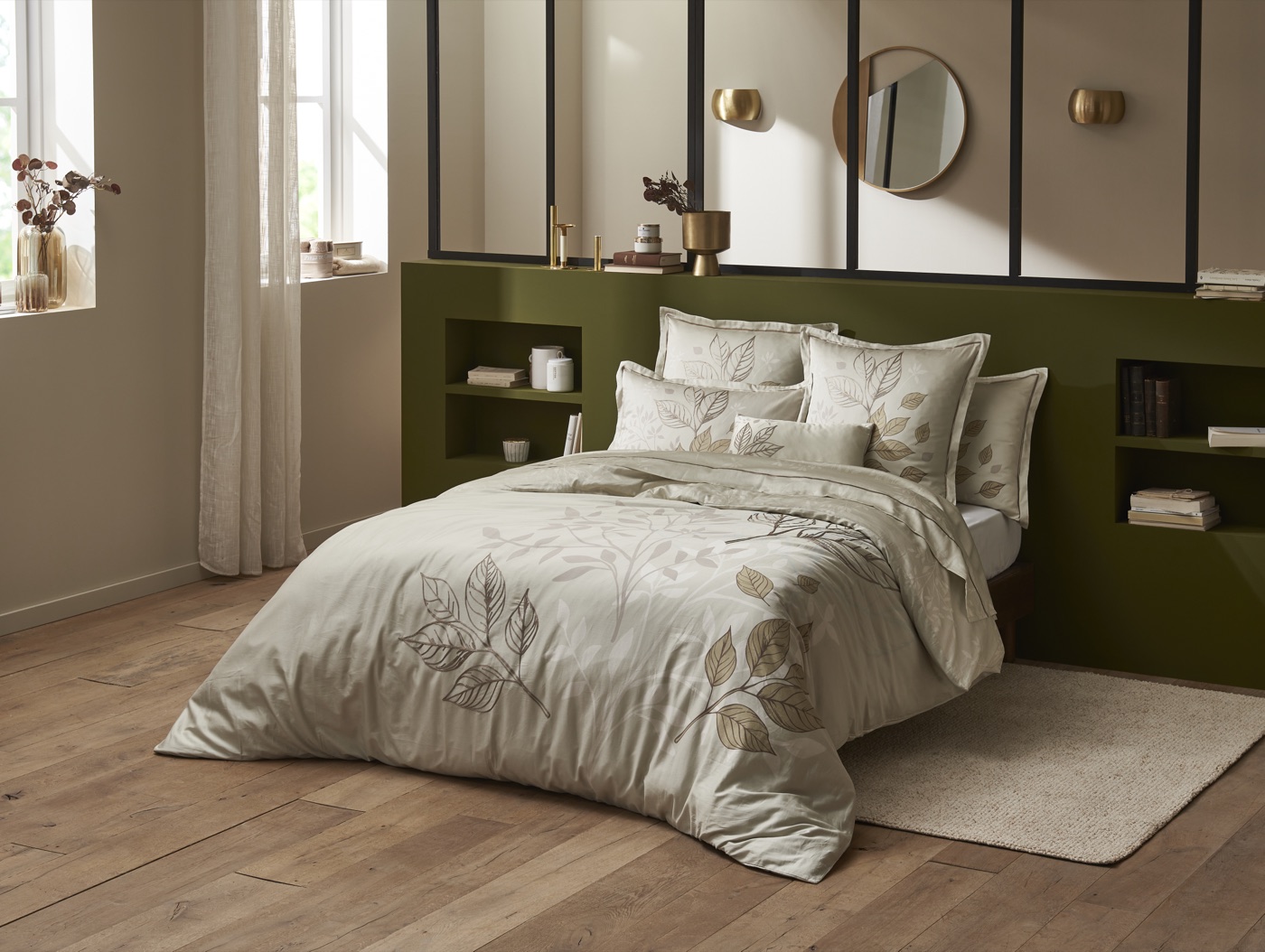
Allow at least two bed linen sets per bed, and ideally three: one on the bed, one in the wash or drying, and one folded in the cupboard. This rotation lets you change the sheets every week without waiting for the laundry to dry, and spreads the wear across the sets, so they last longer.
This article is part of our guide How to Choose Your Bed Linen.
Why three sets is the right number
With a single set, you have to wash, dry and put the linen back on the same day, which is rarely possible, especially without a tumble dryer: a cotton duvet cover often takes more than a day to air dry. With two, you are covered, but the slightest mishap (a stain, an illness, a guest) leaves you without a spare.
Three sets strike the right balance:
- the first is on the bed;
- the second is in the wash or drying;
- the third waits, clean and ironed or folded, in the cupboard.
Each set is then used only one week in three. It goes through fewer washes a year, which slows down pilling, fading and thinning of the fabric. To store spare linen without it getting damp or creased, see our tips on storing bed linen.
The right number for your situation
| Situation | Sets recommended per bed | Why |
|---|---|---|
| Main bed, weekly washing | 3 | rotation without waiting for drying |
| Tight budget, tumble dryer available | 2 | washed and dried the same day |
| Child's bed, allergies, little accidents | 3 to 4 | more frequent changes, washing at 60 °C |
| Guest room | 2 | one on the bed, one spare |
| Holiday let or guesthouse | 3 minimum | back-to-back stays |
If you are moving in, start with two sets for the main bed, then add a third: our list of bed linen for a first flat covers the essentials. For a bed that is rarely used, see our article on bed linen for a guest room.
One set per season?
Many households keep their three rotation sets in a versatile material, such as cotton percale, which is cool and breathable. They add a warmer set for winter, in flannel or cotton sateen, and possibly a set in linen or cotton gauze for summer nights.
In that case, count for example three sets for the year plus one or two seasonal ones. There is no point in collecting more: a set that is rarely used yellows and picks up the smell of the cupboard.
What a set contains, and what else to plan for
A bed linen set usually includes a duvet cover and one or two pillowcases; some add a flat sheet. The fitted sheet is often sold separately, as its size depends on the mattress and its depth. So remember to plan for:
- as many fitted sheets as sets, so two or three per bed;
- extra pillowcases, as they are changed more often than the duvet cover, ideally twice a week for sensitive skin;
- two mattress protectors, so you always have a clean one while the other dries.
The right sizes for each set
All the sets for one bed should be the same size, otherwise the rotation becomes a headache. Key reminder: choose the duvet cover to the size of the duvet, not the bed.
- Double bed 140x190 or 140x200 cm: duvet and cover 220x240 cm, fitted sheet to the size of the mattress.
- Queen size 160x200 cm: duvet and cover 240x260 cm, fitted sheet 160x200 cm.
- King size 180x200 cm: duvet and cover 240x260 cm, fitted sheet 180x200 cm.
For other beds, see our bed linen size guide.
Fewer sets, but better quality
Three good-quality sets are better than six cheap ones that pill after a few washes. Long-staple cotton, a tight weave (percale or sateen), a thread count of around 57 to 80 threads/cm² and careful finishing ensure the linen stands up well to washing. To know what to look for, read our article on how to recognise quality bed linen, then browse our bed linen sets to build your rotation.
In summary
- Two sets per bed at least, three for an easy rotation: one on the bed, one in the wash, one spare.
- Three to four for a child's bed or with allergies; two are enough for a guest room.
- Plan as many fitted sheets as sets, extra pillowcases and two mattress protectors.
- Keep the same size for all the sets of a bed, choosing the cover to the size of the duvet.