Luxury bed linen is justified by its raw material (long-staple cotton, linen or silk), by the density and evenness of its weave, and by finishing designed to last. It costs more at the outset, but pays for itself through a feel that improves wash after wash and a much longer lifespan. You still need to know how to read a label, because price alone proves nothing.
This article is part of our guide How to Choose Your Bed Linen.
The fibre: where the difference begins
Everything starts with fibre length. Long-staple cotton, or extra-long staple beyond about 35 mm, produces a finer, more even and stronger yarn. The resulting fabric is softer, pills less and stands up better to repeated washing.
- Combed cotton: an extra combing step removes short fibres and impurities. The yarn is smoother and the fabric crisper.
- Washed linen: a naturally long, very hard-wearing fibre that softens with every wash and regulates temperature well.
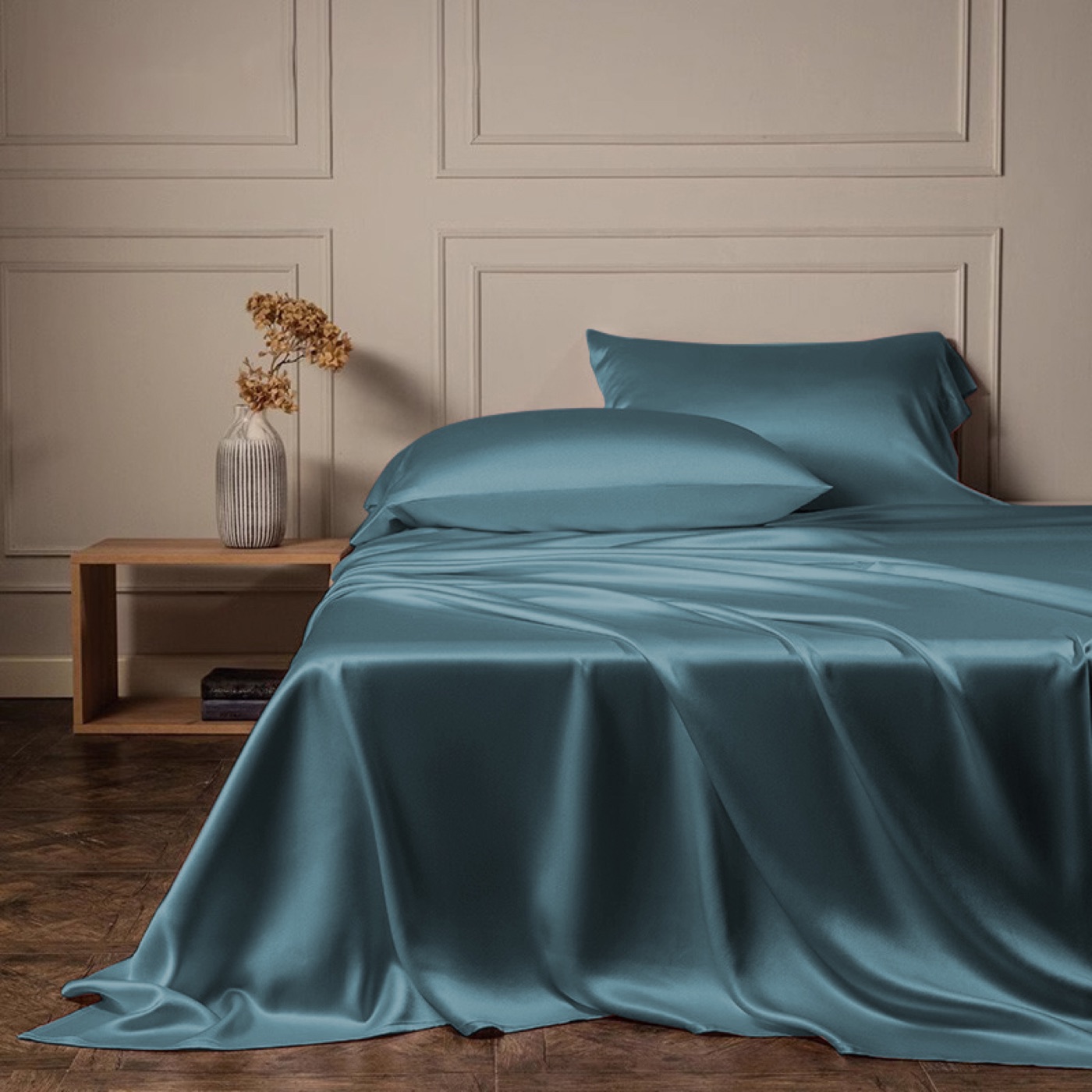
- Mulberry silk: the smoothest and most fluid, but more delicate to care for.
By contrast, short-staple carded cotton is cheaper to produce, but its fibres work loose from the yarn faster: that is what causes pilling and fabric that thins over time.
The weave: percale, sateen and thread count
In France, density is measured in threads per cm². Cotton percale has at least 57 threads/cm²; high-end percales reach 80 threads/cm² and more. Cotton sateen, woven to bring the yarn to the surface, usually sits between 80 and 120 threads/cm².
Be wary of very high figures expressed per square inch: they cannot be compared with threads/cm² and are sometimes inflated by counting each ply of a twisted yarn. A tightly woven fabric with a fine yarn is worth more than an impressive number achieved with a thick one.
| Criterion | Everyday linen | High-end linen |
|---|---|---|
| Fibre | Short-staple carded cotton | Long-staple fibres, combed cotton, linen, silk |
| Density (percale) | Under 57 threads/cm² | 57 to 80 threads/cm² and more |
| Finishing | Plain hem | Hemstitch, satin-stitch edging, piping, embroidery |
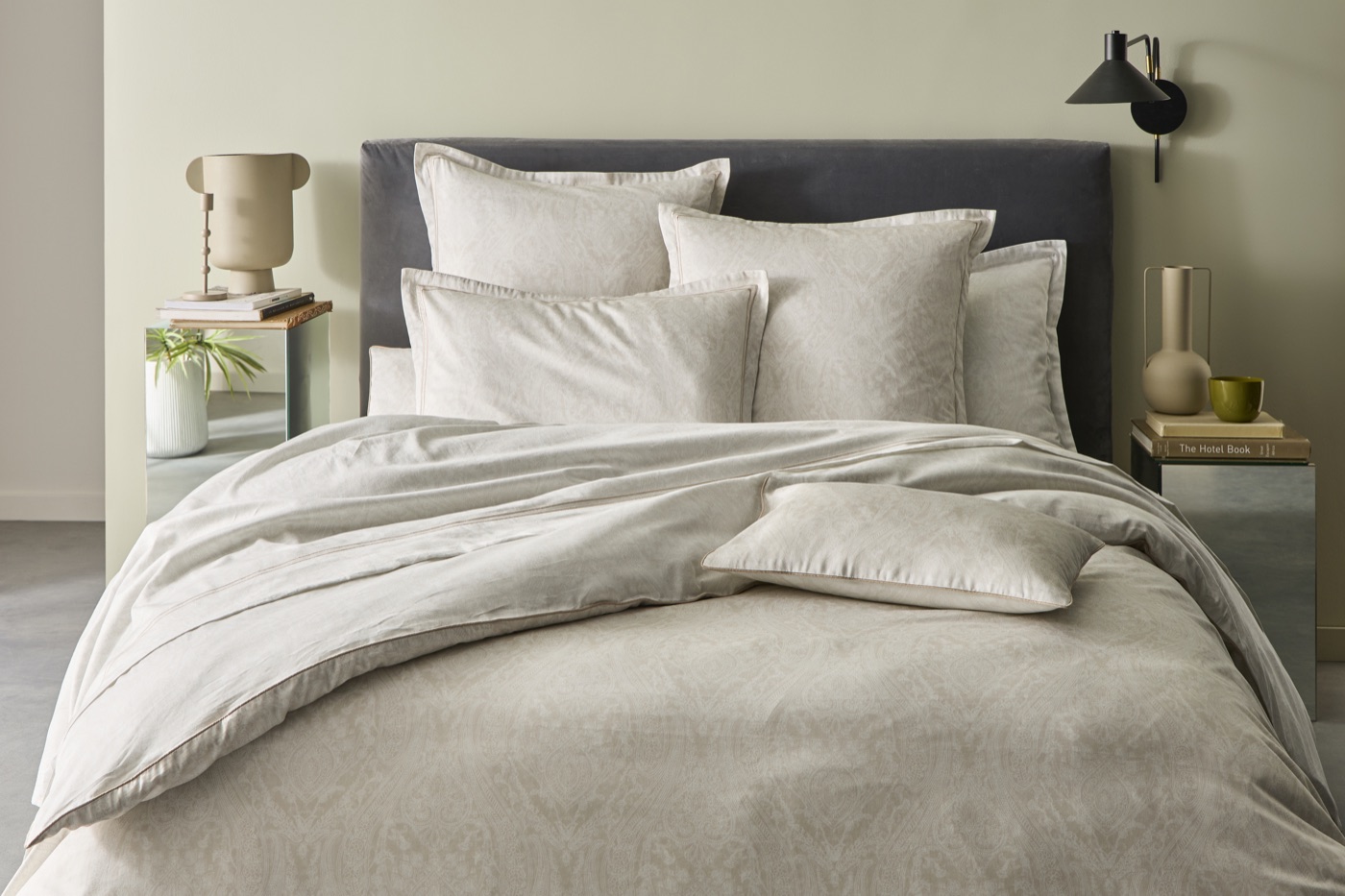
| Pillowcases | Short flap | Deep flap that holds the pillow in place |
| Wash resistance | Shrinks, loses colour | Stable size and colour |
The finishing that makes the difference
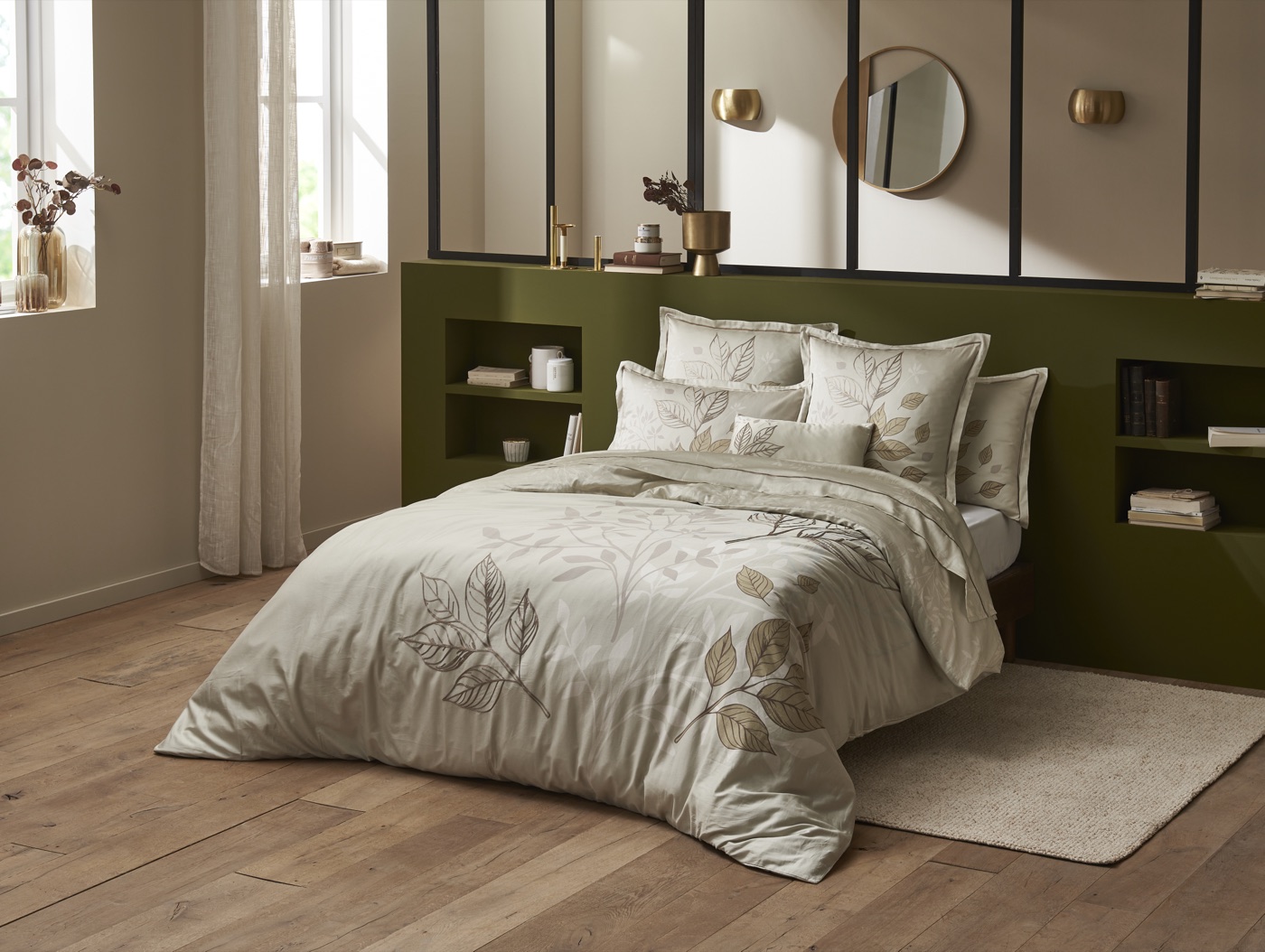
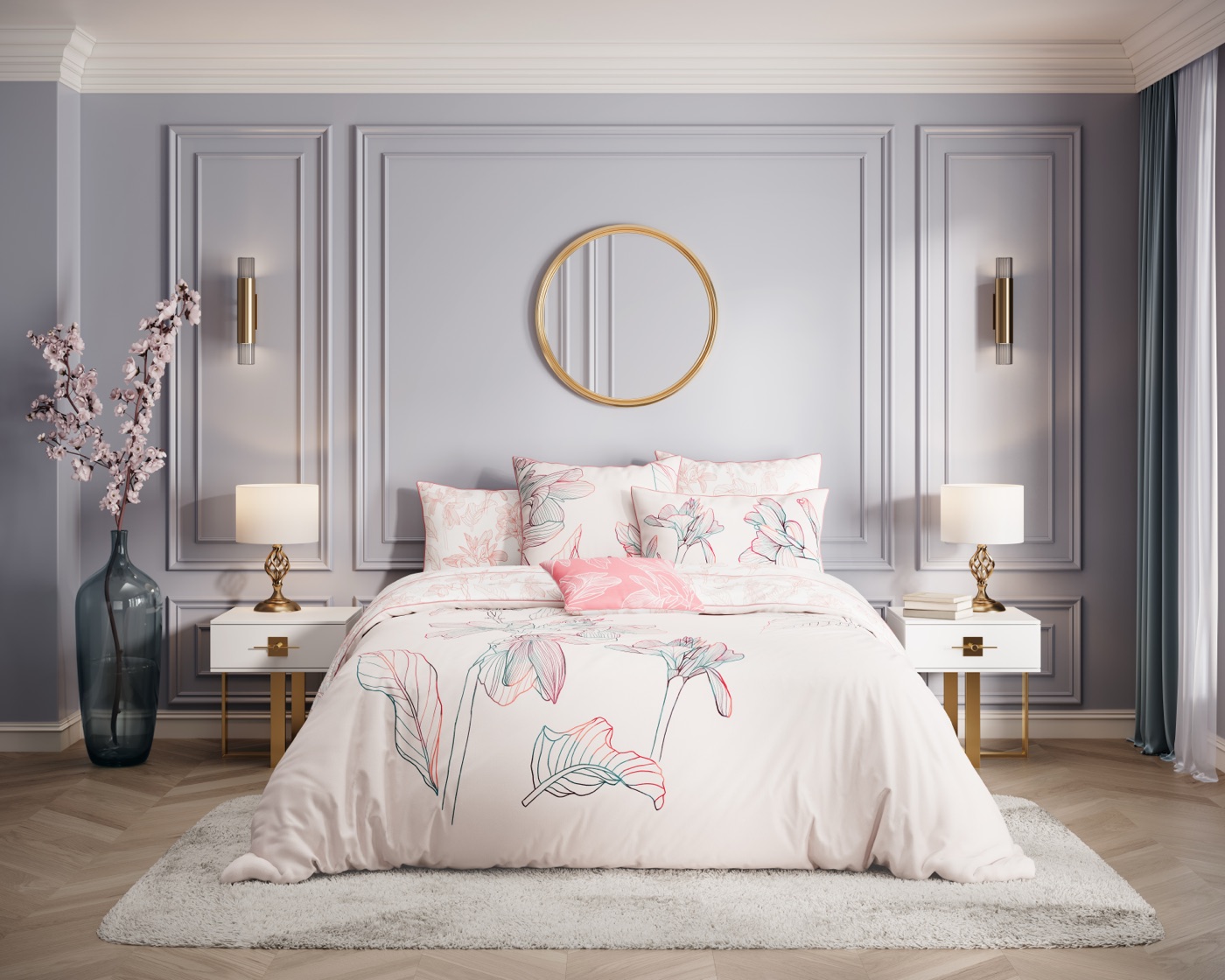
On a quality set, the details are worked: hemstitching or satin-stitch edging on the sheet's turn-down, piping or embroidery on the duvet cover, even and tight seams. The closure matters too: firmly sewn buttons or a wide flap that stops the duvet from slipping.
Other finishes are invisible but felt in use: pre-shrunk fabric that keeps its size after washing, a fitted sheet with a generous pocket and elastic all the way round, dye that holds at 60 °C without bleeding.
What does not justify the price
- Undefined words such as "luxury" or "hotel quality", with no composition or density stated.
- A thread count with no unit, or given per square inch with no other information.
- A very silky feel in the shop: it sometimes comes from finishing agents that disappear in the first wash.
- A cotton-polyester blend sold at the price of 100% cotton.
How to check before you buy
- Read the composition: 100% cotton, linen or silk, and the word "combed" where it applies.
- Look for the density in threads/cm² and the weave (percale or sateen).
- Check for a label such as OEKO-TEX Standard 100, which certifies the absence of harmful substances.
- Check the actual dimensions and the pocket depth of the fitted sheet.
- Look at the care label: good-quality white cotton withstands a 60 °C wash.
To go further, see our guide to recognising quality bed linen, and our advice on where to buy quality bed linen.
The right calculation: cost per night
A set that costs twice as much and lasts twice as long works out at the same price per night, with greater comfort throughout its life. Lifespan also depends on rotation: by alternating two or three sets, each one wears more slowly. Our article on how many bedding sets per bed helps you work out that stock.
Care does the rest: wash colours at 40 °C and whites at up to 60 °C, skip fabric softener, which clogs the fibres, and dry in the open air or tumble dry on low. To choose, browse our selection of luxury bedding sets or our full range of bedding sets.
In summary
- Luxury in bed linen comes first from the fibre: long-staple combed cotton, linen or silk.
- Density is read in threads/cm²: at least 57 for percale, 80 and more for high-end percale.
- Finishing (hemstitch, satin stitch, deep flap, generous pocket) marks a set made to last.
- A high price with no stated composition or density proves nothing.
- Measured per night, durable linen is not necessarily more expensive.