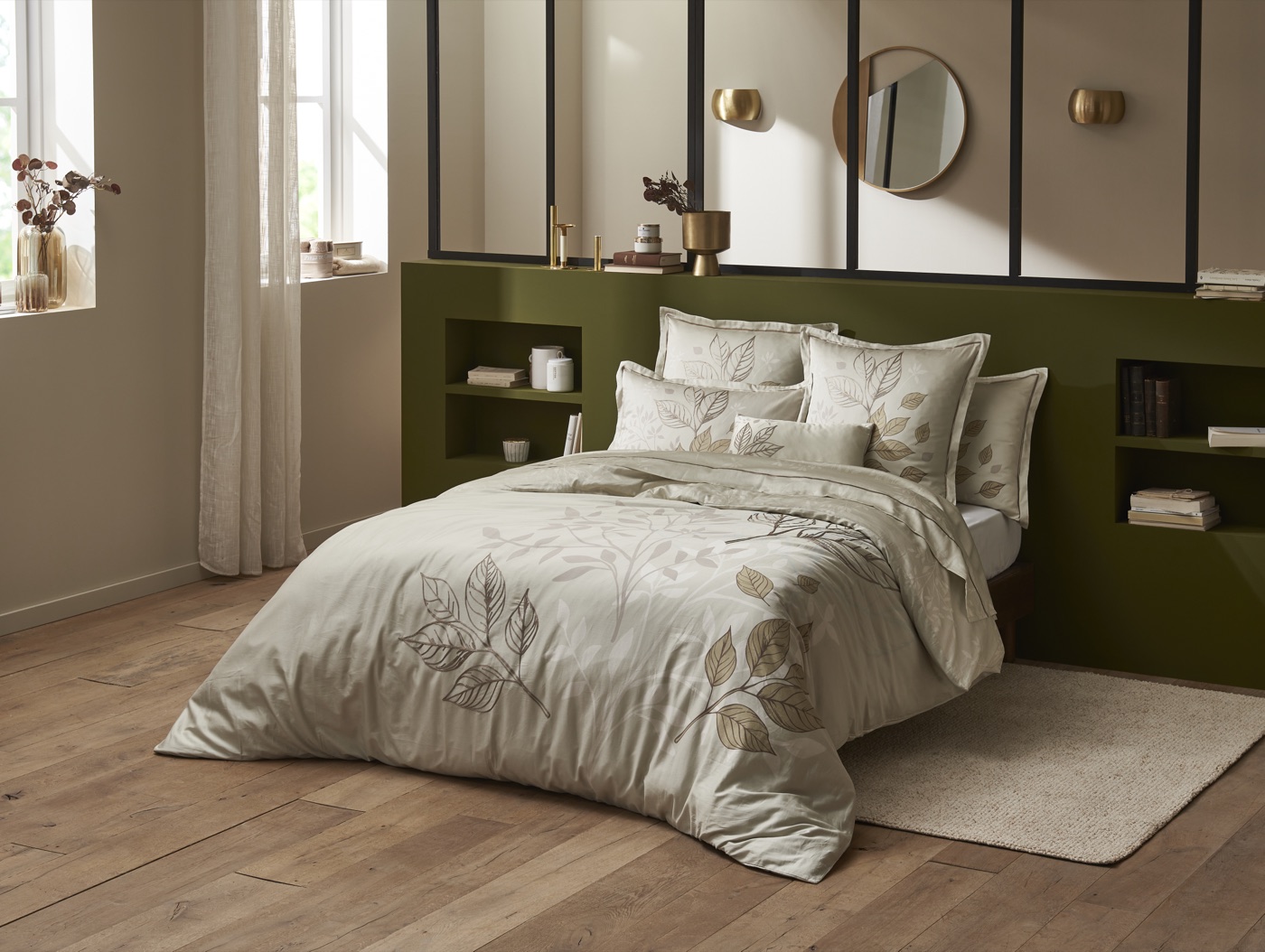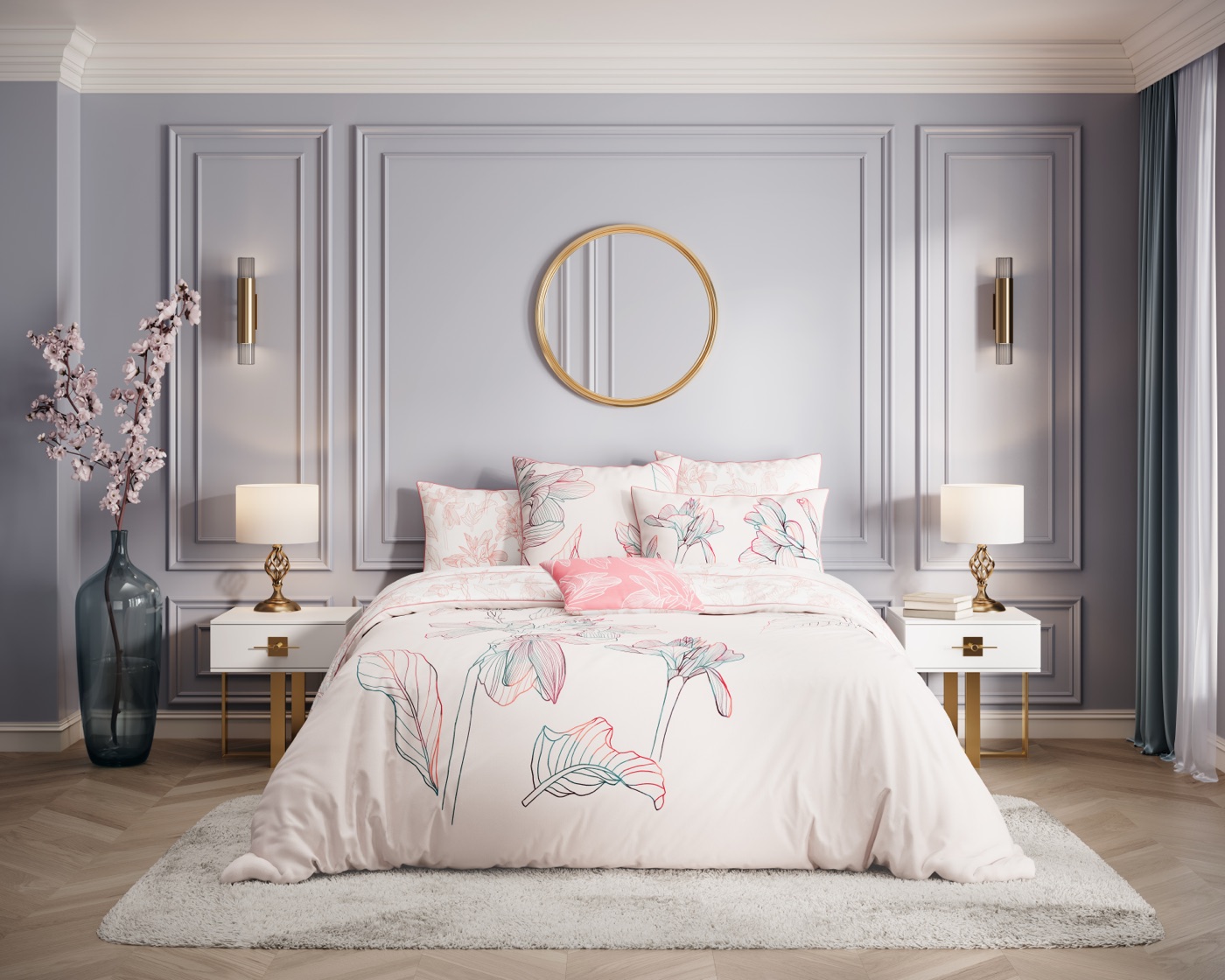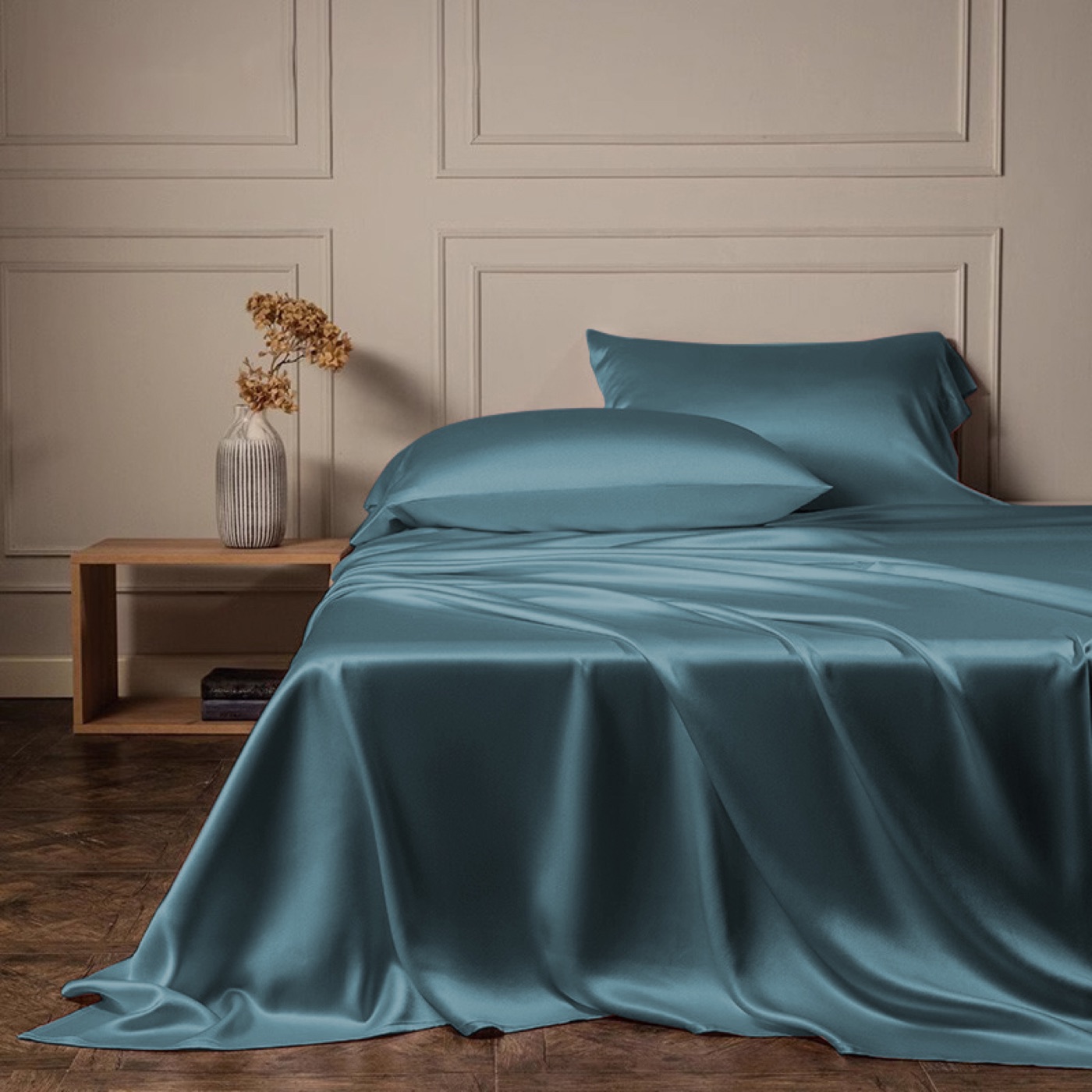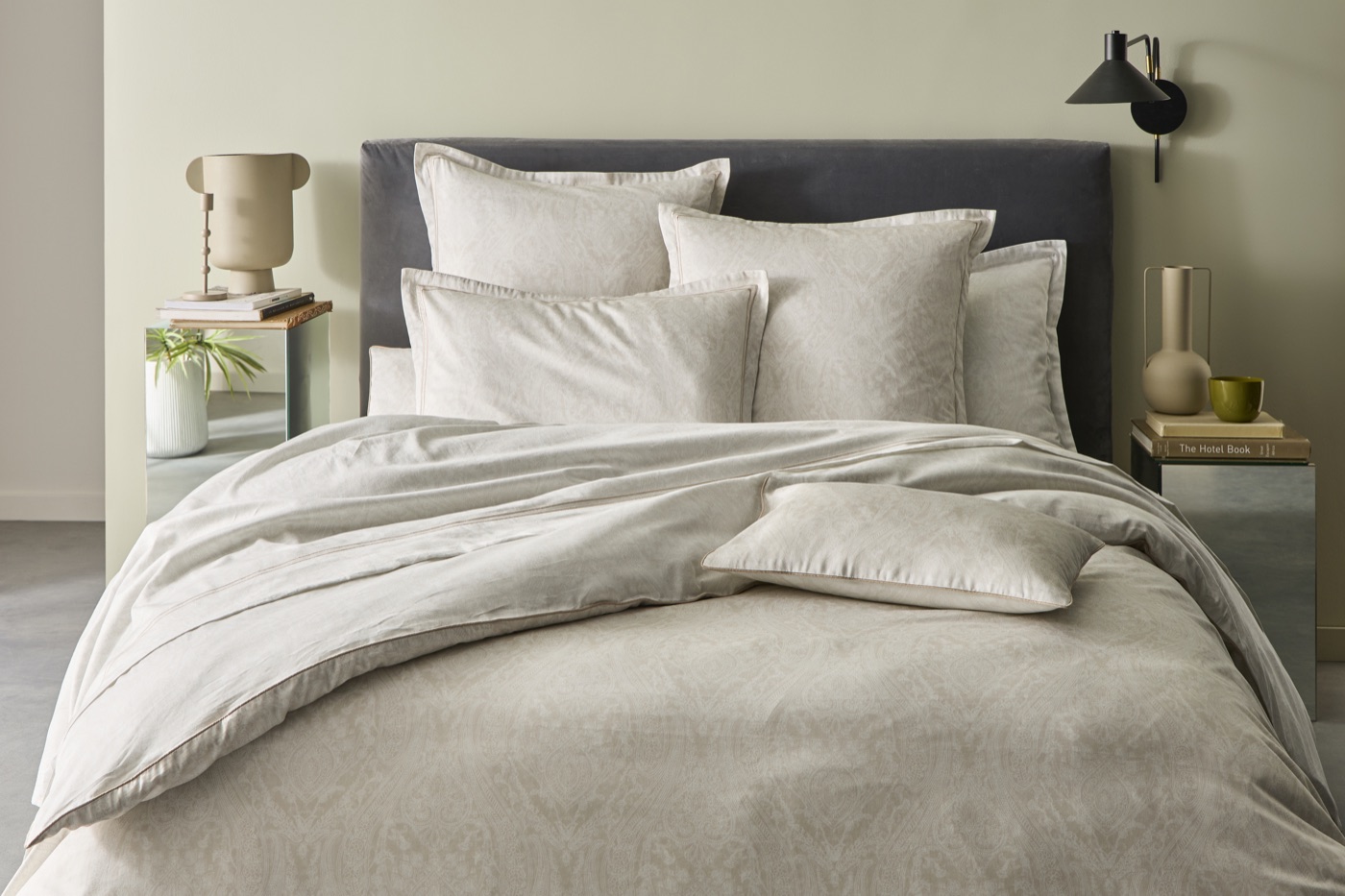
Quality bed linen is recognised first by its material, long-staple cotton or well-spun linen, then by a tight, even weave such as cotton percale or cotton sateen. Careful finishing, a consistent thread count and labels such as OEKO-TEX complete the picture: together, they ensure softness, breathability and durability wash after wash.
This article is part of our guide How to Choose Your Bed Linen.
1. The material: the foundation
Natural fibres remain the benchmark for sleep, as they absorb moisture and let the skin breathe.
- Cotton is the most common material. Quality depends on fibre length: long-staple cotton, often combed (with short fibres removed), produces a finer, more even and stronger yarn that pills less.
- Linen is very hard-wearing and regulates temperature; good washed linen is supple from the start and softens further with each wash.
- Silk has an incomparable feel, but needs delicate care.
- Polycotton (a cotton and polyester blend) is not "bad": it dries fast and creases little. However, it breathes less well and pills more easily than good cotton.
On the label, look for "100% cotton" or "100% linen", and the type of cotton where it is given.
2. The type of weave
With the same fibre, the weave changes everything: the feel, the look and the durability.
| Weave | Usual density | Feel and look | Ideal for |
|---|---|---|---|
| Plain cotton | about 40 to 50 threads/cm² | simple, slightly rougher | everyday use, children's rooms |
| Cotton percale | from 57 threads/cm², often 70 to 80 | matt, smooth, cool, crisp | hot sleepers, all seasons |
| Cotton sateen | often 80 to 120 threads/cm² | silky, slightly lustrous, cosy | people who feel the cold, winter |
| Washed linen | judged by weight rather than threads | textured, naturally crumpled | summer, warm climates |
Percale is considered high-end because its tight one-over, one-under weave of fine yarns produces a fabric that is dense, breathable and very durable. To see what really sets high-end linen apart, read our article on luxury bed linen.
3. Thread count: useful, but not enough
In Europe, thread count is often expressed in threads per cm² and measures the density of the fabric: the higher it is, the tighter and finer the weave. Quality sheets generally fall between 57 and 120 threads/cm². This figure should, however, be read with care:
- above roughly 120 threads/cm², some manufacturers count multi-ply yarns (several twisted strands) to inflate the figure, with no real gain in quality;
- a high thread count with short-staple cotton gives a dense fabric that will still pill quickly;
- for linen, flannel or gauze, look at the weight (in g/m²) instead.
Thread count should therefore not be the main criterion, but one clue among others. Our article what thread count for quality sheets gives the benchmarks.
4. Finishing and making-up
The details quickly reveal how well something is made. Turn the item inside out and check:
- the seams: even and tight, with no loose threads; French or topstitched seams hold up better in the wash;
- the hems: wide and double-folded, they prevent fraying;
- the duvet cover closure: firmly sewn buttons, poppers or a zip hidden under a flap;
- the pillowcases: a deep inner flap (housewife closure) that holds the pillow in place;
- the fitted sheet: elastic sewn all the way round and a depth suited to the mattress;
- the colours: even dyeing, with no paler patches.
5. Labels and certifications
Labels provide a guarantee checked by an independent body:
- OEKO-TEX Standard 100: the textile has been tested and contains no harmful substances above set limits. It is the most common label for bed linen.
- GOTS: organic cotton, with environmental and social requirements throughout the production chain.
A label does not tell you everything about comfort or durability, but it rules out products treated with unwanted substances.
6. The label, your eyes and your hands
Before buying, take time to read the textile label: composition, weave, thread count, care instructions (good cotton can usually take 60 °C) and dimensions. Then trust your senses:
- against the light, the weave should be even, with no thinner patches or excessive see-through;
- to the touch, the fabric is smooth and supple; be wary of excessive stiffness or shine in the shop, often due to a finish that disappears in the first wash;
- when you crumple a corner, good percale creases slightly then relaxes, without staying sharply folded.
Why invest in quality bed linen
Good bed linen lasts for years, stays pleasant wash after wash and improves sleep comfort as much as a good pillow. It often works out cheaper in the long run: three well-made sets are better than a pile of sheets that pill, as we explain in how many bed linen sets per bed. To go further, our article where to buy quality bed linen helps you decide where to shop, and you can compare materials and weaves in our bed linen range.
In summary
- Material: long-staple cotton, linen or silk; polycotton is practical but less breathable.
- Weave: a tight, even cotton percale or sateen.
- Thread count: generally between 57 and 120 threads/cm², to be read alongside fibre quality.
- Finishing: careful seams, hems, closures and fitted sheet depth.
- Labels: OEKO-TEX for the absence of harmful substances, GOTS for organic cotton.
- Check the label, look at the fabric against the light and beware of finishes.