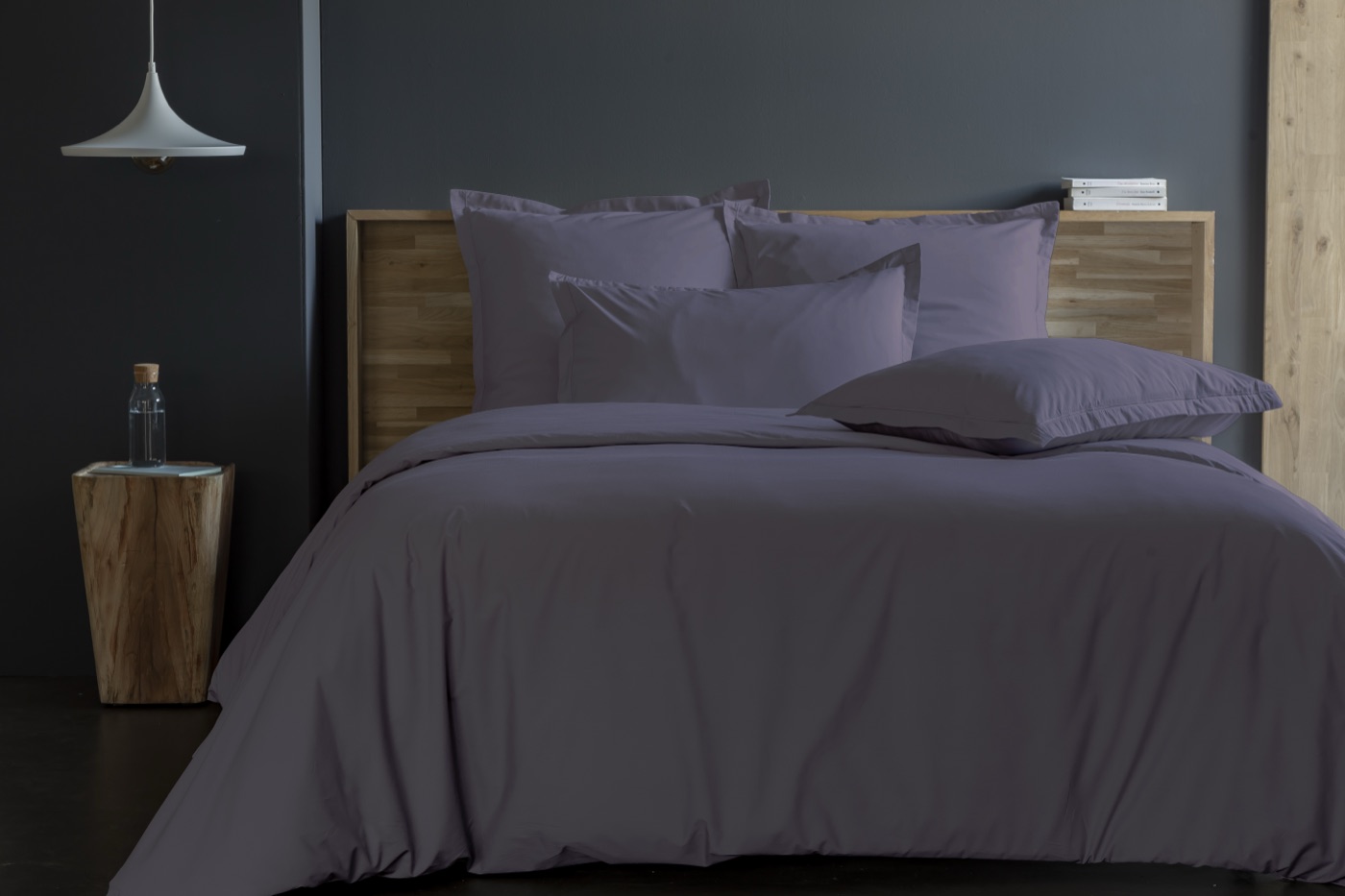
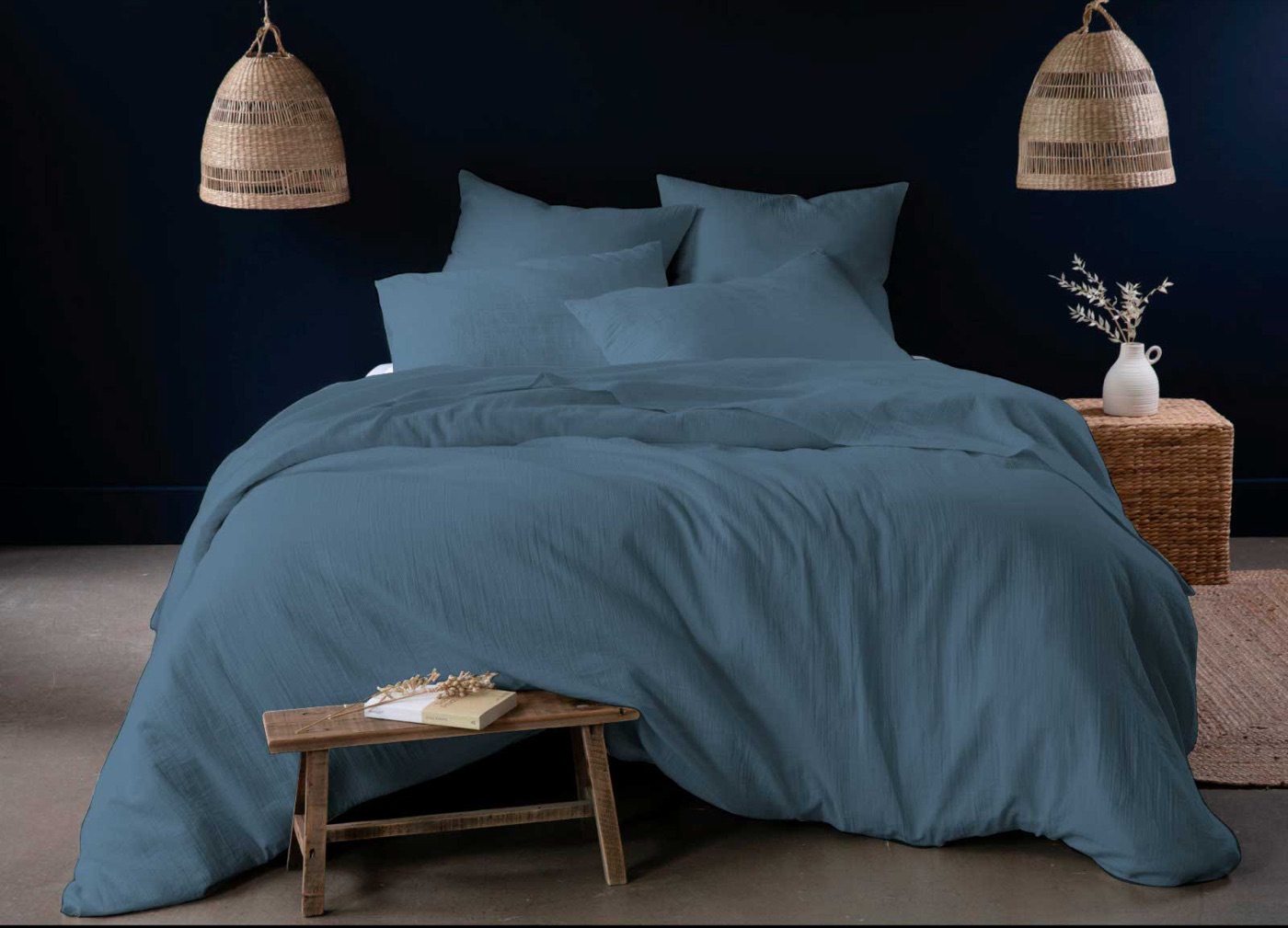
Choose linen if you often sleep hot, love natural textures and a relaxed, rumpled bed; choose cotton if you prefer a smooth, soft feel from day one, simple care and a more affordable budget. Both are breathable natural fibres: the difference lies in the feel, the look and the way they age.
This article is part of our guide Differences between bed linen materials.
Two natural fibres with very different origins
Cotton comes from the fluff surrounding the seeds of the cotton plant. Its short, fine fibres are spun and then woven into percale, sateen or gauze depending on the feel you want.
Linen is a fibre extracted from the stem of the flax plant. Its fibres are much longer and stiffer, producing a fabric that is both very strong and slightly irregular. For bed linen it is almost always offered as washed linen: a final wash during manufacturing softens the fibre and gives it its rumpled look.
There is also linen-cotton blend (called "métis" in French), which aims to combine the body of linen with the softness of cotton.
Linen vs cotton at a glance
| Criterion | Washed linen | Cotton (percale or sateen) |
|---|---|---|
| Feel | Textured, slightly rustic at first, softens with every wash | Smooth and soft from first use |
| Look | Matte, naturally rumpled | Crisp and matte (percale) or slightly lustrous (sateen) |
| Temperature regulation | Excellent, very cool in summer | Good, warmer in winter |
| Moisture absorption | Very high, dries quickly | Good |
| Strength | Very high, long fibre | Good, especially combed cotton |
| Ironing | Unnecessary | Optional, recommended for percale |
| Everyday wash | 40 °C | 40 to 60 °C |
| Price | Higher | More affordable |
Comfort: coolness, warmth and feel
Linen is the go-to fibre for hot nights. It absorbs a large amount of moisture without feeling damp, lets it evaporate quickly and stays cool to the touch. It suits people who sweat at night, attic bedrooms and hot summers. To go further, see which bed linen fabric is the coolest.
Linen also regulates temperature in winter: it does not make the bed cold, it simply prevents that clammy feeling.
Cotton, on the other hand, offers instant softness. Percale is matte, cool and slightly crisp; cotton sateen is silkier and more enveloping. If you feel the cold or love slipping into smooth sheets, cotton will often be more pleasant than linen.
Durability and ageing
Linen is one of the strongest textile fibres. Properly cared for, a linen sheet lasts for many years and becomes softer and more beautiful over time. It can feel a little dry during the first washes: this is normal, the fibre gradually opens up.
The lifespan of cotton depends mainly on fibre quality and weave. A long-staple combed cotton, tightly woven, stands up well to repeated washing and pills very little. Short-staple cotton wears faster and can shed lint.
Everyday care
- Washed linen: wash at 40 °C, ideally on a gentle cycle, without fabric softener, which coats the fibre and reduces its absorbency. Line dry or tumble dry on low heat, then fold without ironing.
- Cotton: wash at 40 °C for everyday use and at 60 °C for hygiene (allergies, illness) if the care label allows. Ironing is optional; percale folded while still slightly damp creases much less.
- In both cases, wash new sheets before first use and do not overload the drum.
Environmental impact
Linen is often described as a more frugal fibre: flax needs little irrigation and little fertiliser, and almost the whole plant is used. Western Europe, and France in particular, is the world's leading producer of fibre flax.
Conventional cotton is a crop that uses more water and more chemical treatments. Organic cotton reduces this impact; to find out what certifications actually guarantee, read our article on organic cotton and the GOTS label.
Which one suits you?
- You sleep hot or live in a warm region: washed linen.
- You like a natural, relaxed bed with no ironing: washed linen.
- You want a smooth, soft feel straight away: cotton, in percale or sateen.
- You feel the cold: cotton sateen, or flannel in the depths of winter.
- You can't decide: alternate, with a linen set for summer and a cotton set for winter.
You can also mix the two: a linen duvet cover with a percale fitted sheet, for example. Discover our washed linen bed linen or our full range of cotton and linen bed linen.
In summary
Linen is cooler, stronger and more natural-looking; it softens over time but costs more. Cotton is soft from the start, easy to care for and more affordable, with a feel that varies with the weave. The right choice depends mostly on how warm you sleep and the feel you prefer.